
Quick answer: if a can of paint has fully dried or hardened, it's regular trash. If it's still liquid and oil-based, or it's a solvent, pesticide, pool chemical, propane tank, or car battery, it's household hazardous waste (HHW), and in Rockland that means a South Shore Recycling Cooperative event — including a joint collection day shared with neighboring Hanover — rather than the Recycling Center's regular hours.
Rockland's shoe-manufacturing history left behind a lot of older housing stock with decades of accumulated chemicals, solvents, and paint in basements and garages — the same kind of properties where hazardous materials tend to turn up during a real cleanout. The rules for what actually counts as hazardous don't change based on how long something's been sitting on a shelf, though. This guide covers what qualifies, why it matters, and how we handle it as part of a Rockland cleanout.
Clearing Out Chemicals, Paint, or Old Batteries?
Tell us what you've got and we'll walk you through what we can take and how. Call 781-820-2113.
Oil-Based vs. Latex: The Actual Rule
This is the single most common source of confusion on any cleanout, so let's settle it: latex (water-based) paint is not hazardous waste once it's dried or hardened. Mix in some cat litter or paint hardener, or just leave the lid off for a few days, and a dried can of latex paint can go out with the regular trash, per Massachusetts Department of Environmental Protection (MassDEP) guidance — the Rockland Recycling Center even accepts empty, dried paint cans as part of its regular recycling stream.
Oil-based paint is a different animal entirely. It's classified as hazardous waste regardless of how dry or old it looks, because it remains ignitable and contains solvents that don't break down the way water-based formulas do. Same goes for oil-based stains and varnishes.
Rule of thumb: if cleanup required paint thinner, treat the leftovers like they're still wearing a hazmat suit.
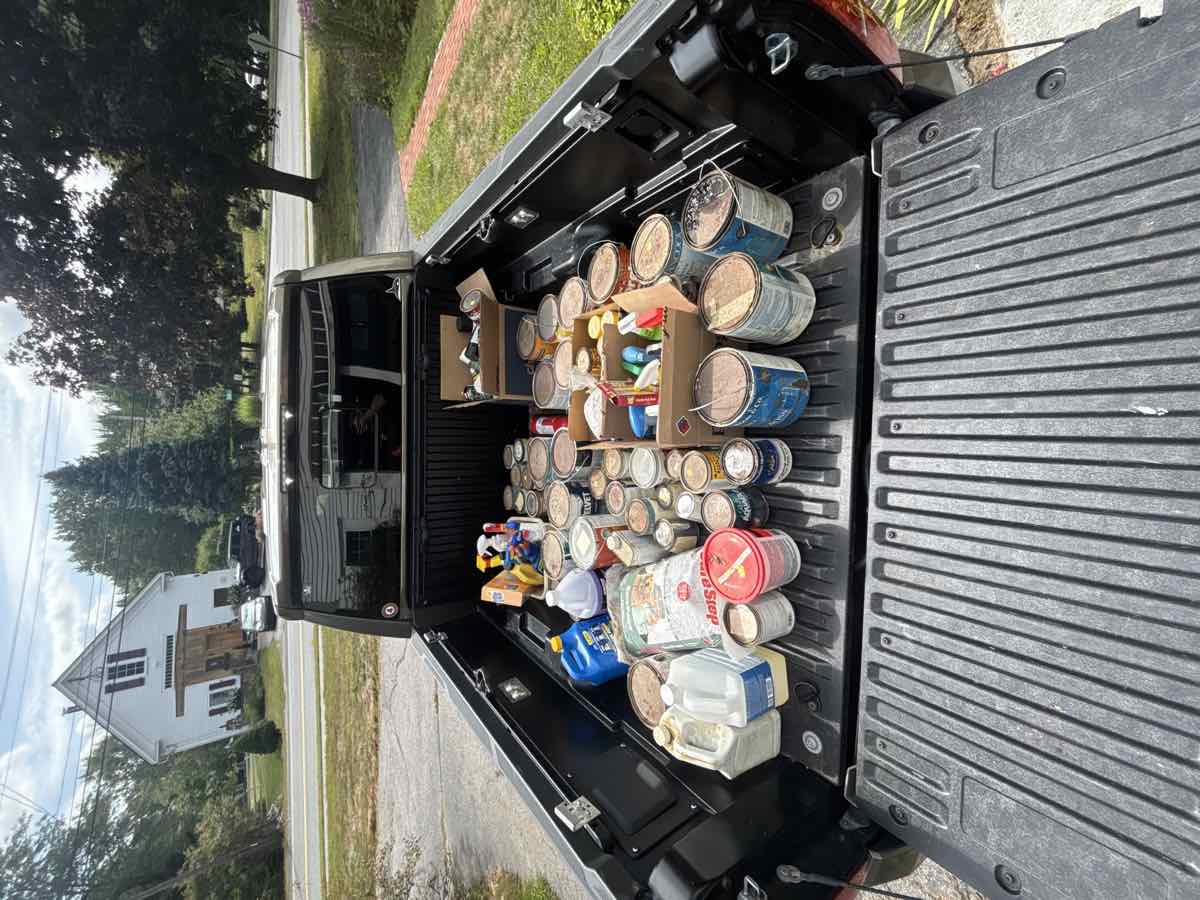
What Counts as Household Hazardous Waste
The EPA defines household hazardous waste as anything corrosive, toxic, ignitable, or reactive. In practice, on a typical South Shore cleanout, that usually means:
- Oil-based paint, stains, and varnish
- Paint thinners, solvents, and adhesives
- Pesticides, herbicides, and fertilizers
- Pool and spa chemicals
- Propane tanks and aerosol cans
- Car batteries and motor oil
- Old fluorescent bulbs and mercury thermostats
Notably absent from that list: dried latex paint, empty containers, and most modern LED bulbs — all of which are safe for regular disposal.
Not sure if something on your property counts? Send us a photo before we schedule the job and we'll tell you straight — no guessing games.
Ask Us About Your ItemsRockland's Regional HHW Program
Rockland doesn't run its own standalone hazardous waste facility — it's a member of the South Shore Recycling Cooperative (SSRC), attending rotating collection events across member towns throughout the year, including a joint Hanover/Rockland collection day. Because these are scheduled events rather than a walk-in facility, checking the current SSRC calendar before assuming a date is coming up soon matters more here than in towns with a standing HHW drop-off.
Rockland's Select Board has also discussed joining a regional effort with other South Shore towns to build a permanent, fixed HHW site at the Hanover Transfer Station — worth watching, since a standing facility would be a meaningful change from the current rotating-event model if it moves forward.
How We Handle It
As part of larger cleanouts in Rockland, we identify hazardous items on-site, keep them separate from the rest of the load, and coordinate proper disposal through licensed partners rather than sending anything questionable to a landfill or incinerator. If you're planning a cleanout and know there's old paint, chemicals, or batteries involved, mention it when you call — it changes nothing about your price, but it changes everything about how we plan the job.
Related Services
Frequently Asked Questions
Is latex paint considered hazardous waste in Massachusetts?
No. Once dried or hardened, latex paint is not regulated as hazardous waste in Massachusetts and can go out with regular trash. Oil-based and alkyd paints are hazardous regardless of how dry they look.
Where do Rockland residents take hazardous waste?
Rockland is a member of the South Shore Recycling Cooperative (SSRC) and attends rotating regional collection events, including a joint Hanover/Rockland collection day, rather than operating a standing hazardous waste facility of its own.
What items count as household hazardous waste?
Oil-based paint and stains, solvents and thinners, pesticides and herbicides, pool chemicals, propane tanks, car batteries, motor oil, and anything corrosive, toxic, ignitable, or reactive under EPA guidelines.
Can Dumpster Dudes pick up hazardous waste in Rockland?
We handle a range of household hazardous items as part of larger cleanouts and coordinate proper disposal through licensed partners. Call ahead with specifics so we can confirm the right approach for your items.
Can I put old paint cans in a rented dumpster?
Dried latex paint, yes. Oil-based paint and other hazardous materials cannot go in a dumpster and need separate handling — let us know what you have before we deliver.
Why can't hazardous waste go in regular trash or a dumpster?
Corrosive, toxic, ignitable, or reactive materials can contaminate soil and water, damage collection equipment, and create fire risk in a truck or dumpster. Federal and state law require separate handling.
Sources: MassDEP Guide to Safely Managing Hazardous Household Products, EPA Household Hazardous Waste guidance, South Shore Recycling Cooperative — Rockland.