

Quick answer: above-ground pool removal on the South Shore typically costs $500-$3,000, with most straightforward jobs landing around $900-$1,500. The exact number depends on pool size, how hard it is to get a truck close to the yard, and whether there's an attached deck or buried electrical line involved. (Yes, we just answered the headline in one sentence — but the part worth sticking around for is what actually happens to the frame, the liner, and a few thousand gallons of water once that pool comes apart.)
Every South Shore neighborhood has one: a round above-ground pool that got a lot of use for a few summers, then quietly became "something we'll deal with eventually." Eventually usually arrives for one of a few reasons — the liner finally gives out, the frame starts rusting through, or a house is going on the market and nobody wants to explain an old pool to a home inspector. Whatever the trigger, above-ground pool removal in South Shore, MA isn't complicated, but it does involve more steps — and more regulation — than most homeowners expect. Here's exactly how it works.
Why Above-Ground Pools Get Removed
Above-ground pools have a real lifespan, and most homeowners encounter one of four situations:
- End of life. A typical steel or resin frame lasts roughly 10-15 years before rust, warping, or structural sag makes it unsafe to keep filled. Once the walls start bowing, that's not a cosmetic problem — it's a failure risk.
- Liner failure. Vinyl liners stretch, fade, and eventually crack or pinhole-leak. A new liner alone can run several hundred dollars installed, which is often the moment a homeowner decides it's cheaper to just remove the pool than keep patching it.
- Selling the house. An old or visibly deteriorating pool is exactly the kind of thing a home inspector flags and a buyer negotiates over. Pulling it before listing removes that variable entirely (more on this below).
- Insurance and liability. Pools are generally classified as an "attractive nuisance" by insurers, which can push up liability premiums or complicate a policy — removal is sometimes the simplest fix.
Sometimes it's simpler than any of that: the kids who used it are in high school now, the pool hasn't been opened in two summers, and the yard underneath it would just be more useful as yard again.
How Removal Actually Works
Above-ground pool teardown is a mechanical process, not a demolition in the deck-and-footings sense — there's no concrete to break up, which is a big part of why it's cheaper and faster than in-ground pool removal. It breaks down into four steps:
- Drain the pool. A submersible pump moves the water out, typically over several hours depending on pool size and pump speed. Where that water is allowed to go is more regulated than most people assume — see the next section.
- Disconnect anything powered. Pump, filter, and any pool lighting get unplugged and disconnected before anyone starts cutting.
- Dismantle the liner and frame. The liner gets cut free and pulled out once the pool is empty (it shrinks and stiffens fast once drained, so this step has a window). The metal wall panels and support frame then unbolt or come apart in sections.
- Haul everything away. Frame, liner, ladder, pump, and any decking debris get loaded out in one trip.
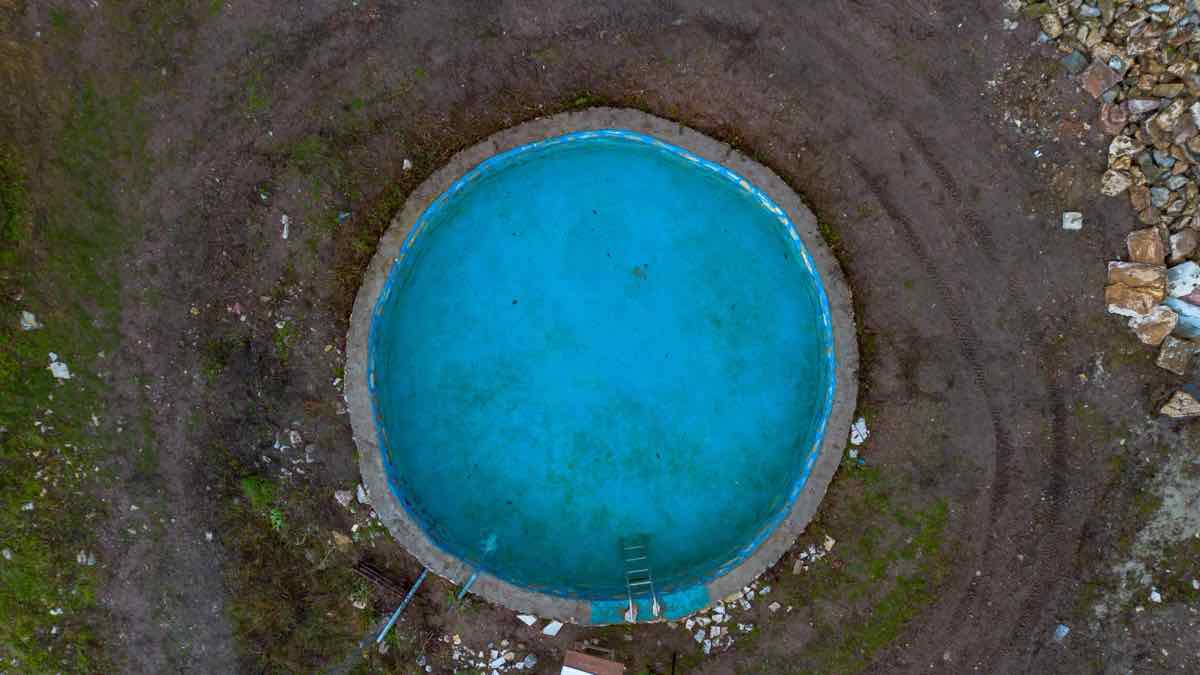
For a standard residential above-ground pool with clear truck access, the whole teardown — drain through haul-away — is usually a one-day job. A larger pool, a tricky backyard, or an attached deck can stretch that to two days.
Frame vs. Liner vs. Water: Three Different Disposal Problems
This is the part almost no generic pool-removal guide walks through, and it matters more in Massachusetts than most states: an above-ground pool isn't one item to dispose of, it's three, and each one is regulated differently.
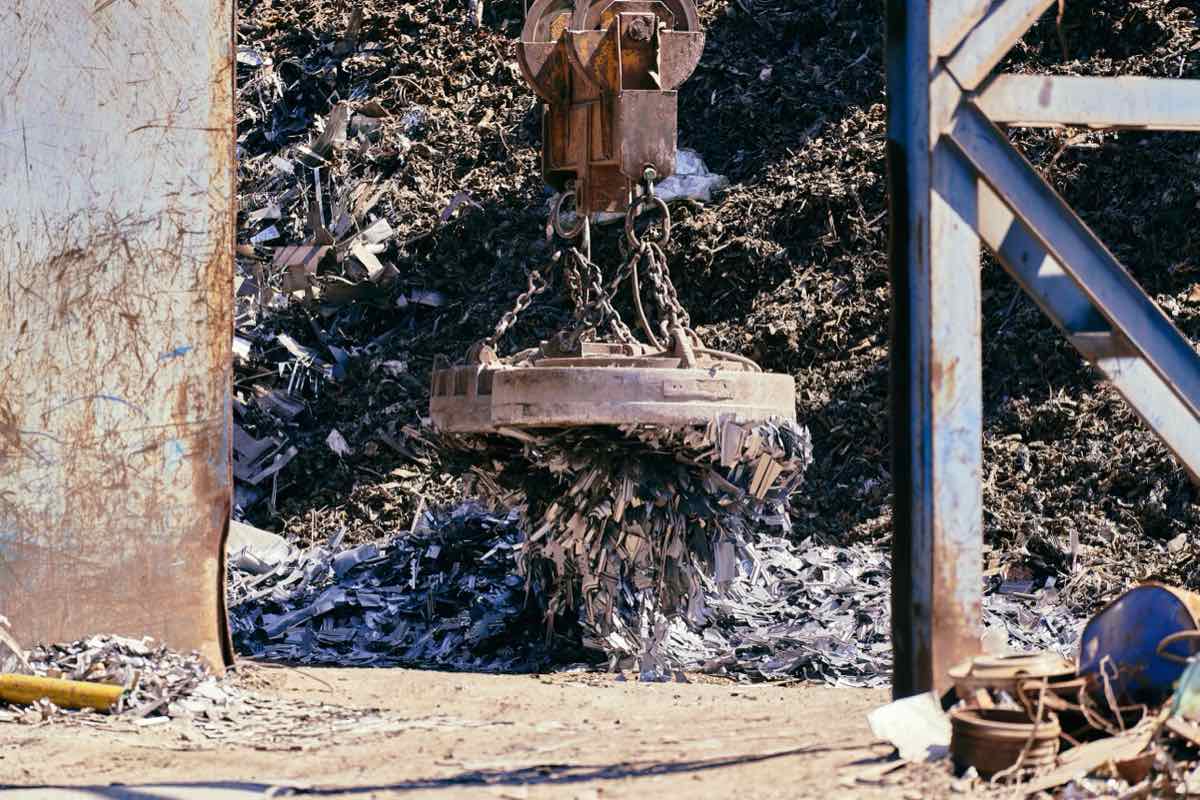
The metal frame is scrap steel or aluminum, and here it's not optional — Massachusetts has banned metal from landfill and incinerator disposal as part of its construction and demolition waste bans since 2006. In practice that's good news: scrap metal is one of the easiest materials to recycle, and it's exactly where a pool frame is supposed to end up anyway.
The vinyl liner sits in a gray area by comparison. It isn't on Massachusetts' banned-materials list the way mattresses or electronics are, but it's also not something most South Shore transfer stations are set up to take as a casual drop-off — it's bulky, it's wet, and it doesn't fold into a trash bag. That's usually the single biggest reason a DIY pool teardown stalls out: the frame is manageable, but nobody wants a soggy 24-foot liner taking up the garage until the next bulk-item pickup window.
The water is the part people think about least and get wrong most often. You can't legally drain a chlorinated pool straight into the street or a storm drain. Storm drains discharge directly to local waterways without any treatment, and chlorine is toxic to fish and aquatic life — this is regulated in Massachusetts and enforced locally as well. The correct approach is to dechlorinate the water first (a dechlorinating product, or letting it sit uncovered for about a week), then drain it onto the lawn away from the street, or into a sanitary sewer connection. A few thousand gallons of pool water dumped down a storm drain is exactly the kind of thing a neighbor photographs and reports.
We handle all three parts in one visit — drain it the right way, cut the liner, break down the frame, and haul the whole thing out. No separate trip for the water, no liner sitting in your garage for a month waiting on a bulk-pickup slot.
Get a Free EstimateWhat Actually Determines the Cost
The $500-$3,000 range for above-ground pool removal isn't random — it's driven by a short list of real factors:
- Pool size. A 15-foot round pool comes apart faster and lighter than a 24-foot oval.
- Access. A pool with a clear path to the driveway is a different job than one behind a fence, down a hill, or wedged between two houses.
- Attached decking. A pool with a built-on wood deck adds real demolition work, closer to a small deck-removal job layered on top of the pool itself.
- Electrical. If the pump or lighting is hardwired rather than plugged in, that connection needs to be safely disconnected before teardown starts.
- Cleanup scope. Some homeowners just want the pool gone; others want the ground underneath leveled and raked out, which adds labor.
On the DIY-versus-hire question, we'll say it plainly: above-ground pool removal is one of the more DIY-friendly items on this list compared to, say, a shed or a deck, because there's no footing to dig out and no permit most of the time. But "DIY-friendly" doesn't mean "free." Factor in a pump rental, a reciprocating saw or heavy-duty shears for the frame, a truck (or several) to haul it, and a full day of actual physical labor cutting and folding vinyl and carrying metal panels — and the math between DIY and hiring it out is a lot closer than the sticker price suggests. If the pool still has standing water and you don't already own a submersible pump, that alone changes the equation fast.
Selling the House? Why Buyers and Insurers Care
If a sale is the reason you're reading this, you're not overthinking it. Insurers generally classify pools as an "attractive nuisance" — a structure that draws children onto a property and creates a liability risk whether or not anyone invited them there. That classification is exactly why most insurers recommend pool owners carry higher liability coverage, often $300,000-$500,000 instead of a standard policy's default. For a buyer taking over that liability, an aging or already-failing above-ground pool isn't a bonus amenity, it's a question mark on day one of ownership.
Practically, that plays out in two ways during a sale: a home inspector flags visible deterioration (rust, a sagging wall, a patched liner) as a condition issue, and a buyer's agent or lender may ask about it directly. Removing the pool before listing takes both conversations off the table instead of negotiating a credit for it at the closing table.
Pool Removal, Dumpster Rental, or a Full Demolition Crew?
A small, accessible above-ground pool with no deck is the kind of job a dumpster rental can support well if you're planning to tackle the teardown yourself over a weekend — rent the container, work at your own pace, and skip the DIY frame-hauling trip to the scrap yard. A pool with an attached deck, buried electrical, or a tight access point is usually faster and safer to hand off entirely, the same logic we lay out in our shed vs. deck demolition guide. If cost is the main question either way, our junk removal pricing breakdown covers how South Shore quotes get built in general.
Related Guides
- Hot tub removal — another backyard fixture with its own electrical and water-disposal rules
- Shed vs. deck demolition — for other backyard structures reaching the end of their life
- Scrap metal removal — what actually happens to the metal frame after teardown
Areas We Serve
We handle above-ground pool removal and demolition across the South Shore, including:
Sources: MassDEP — Massachusetts Waste Disposal Bans, Town of Cohasset — Best Management Practices for Pool & Spa Water Discharge, S.C. Department of Insurance — Pools and Insurance: What You Should Know.
Frequently Asked Questions
How much does above ground pool removal cost?
Most above-ground pool removals on the South Shore run $500-$3,000, with a typical straightforward job landing closer to $900-$1,500. Size, access, and whether there's attached decking or buried electrical are the biggest swings.
How long does it take to remove an above ground pool?
A standard above-ground pool, once drained, usually comes down in a single day. Most of the real time goes into draining, which can take several hours depending on pump speed and pool size.
Can I drain the pool water into the street or a storm drain?
Not while it's chlorinated. Storm drains discharge straight to local waterways without treatment, and Massachusetts regulates pool and spa water discharge for exactly that reason. Water needs to be dechlorinated and drained onto the lawn or into a sanitary connection first.
What happens to the metal frame and the liner?
The metal frame is scrap steel or aluminum and gets recycled - it's actually banned from Massachusetts landfills as construction and demolition debris. The vinyl liner isn't banned, but it's bulky and awkward, and most South Shore transfer stations won't take it as a simple curbside item.
Do I need a permit to remove an above ground pool in Massachusetts?
Most straightforward above-ground pool removals don't require a demolition permit, since there's no structure being torn down to a foundation. If the pool has an attached deck or buried electrical, that part of the job may trigger local permitting - worth a quick call to your town's building department.
Should I remove my above ground pool before selling my house?
It's worth considering. Insurers treat pools as an "attractive nuisance" that can raise liability concerns for a buyer, and an old or failing pool can become a negotiating point during inspection. Removing it ahead of listing takes that variable off the table entirely.
Can you remove a pool that still has water in it?
Yes - we handle the draining as part of the job, so you don't need to pump it out yourself before we arrive.