
Quick answer: appliance removal on the South Shore typically runs $80-$250 per unit, with refrigerators, freezers, and air conditioners landing at the higher end because they contain refrigerant that has to be recovered by a certified technician before the unit can legally be scrapped. (Yes, that's the whole answer in one sentence — but the "why" behind that price gap is where this actually gets useful, so stick with us.)
Every South Shore homeowner eventually ends up with a dead appliance they didn't plan for — a fridge that finally gives out, a washer that leaks, a window AC unit that's been sitting in the garage since October. Unlike a broken lamp or an old couch, you can't just drag it to the curb on trash day. Massachusetts treats large appliances differently, and the ones with refrigerant inside — fridges, freezers, and AC units — come with a federal law attached. Here's what actually determines the cost, what the law requires, and how to get one out of your house without hurting your back or your wallet.
What Counts as an Appliance Removal Job
"Appliance" covers more ground than most people expect, and it changes how a job gets priced and handled:
- Refrigerators and freezers — standalone, side-by-side, chest, or garage units
- Washers and dryers — front-load, top-load, stacked units
- Dishwashers — freestanding or built-in under a counter
- Stoves and ranges — gas or electric, freestanding or slide-in
- Window and portable air conditioners, and dehumidifiers
- Water heaters — often pulled during the same visit as a washer/dryer swap
The dividing line that matters most isn't size — it's whether the unit holds refrigerant. That single detail is why a dead stove and a dead freezer don't cost the same to haul away, even though the freezer might actually be lighter.
Why Appliances Are Harder to Get Rid of Than Regular Junk
A couch is just bulky. A refrigerator is bulky and regulated. Refrigerators, freezers, and AC units all use a refrigerant — still commonly called Freon, regardless of which specific compound is actually inside — to keep things cold, and that refrigerant can't just be vented into the air when the unit dies.
Under EPA Section 608 of the Clean Air Act, the "final disposer" of an appliance — whoever actually scraps or recycles it — is legally responsible for making sure the refrigerant is recovered by a certified technician before that happens. No sticker is required to prove it, but a signed statement naming who recovered it and when has to exist. Skip that step and you're not just cutting a corner; you're violating federal law.
Massachusetts adds its own layer on top: large appliances are on the state's banned-disposal list, meaning they're not allowed in regular trash or at most municipal dumps without going through a recycling or recovery stream first. And as of a 2020 update, MassDEP regulation 310 CMR 7.76 also restricts certain high-impact refrigerants in new equipment sold or installed in the state — part of a broader state push to keep these chemicals out of the atmosphere, not just out of the landfill.
Practically, this means every fridge, freezer, or AC unit needs a stop at a facility equipped to recover refrigerant before it's actually gone for good — not a quick trip to the curb.
How Much Does Appliance Removal Cost on the South Shore?
Pricing comes down to two things: the appliance itself, and whether refrigerant recovery is part of the job. As a general market range:
- Refrigerators & freezers: $100-$250 (refrigerant recovery included)
- Washers & dryers: $80-$200, more if stacked or hardwired
- Dishwashers: $80-$180, more if built-in
- Stoves & ranges: $80-$180, more for a gas line disconnect
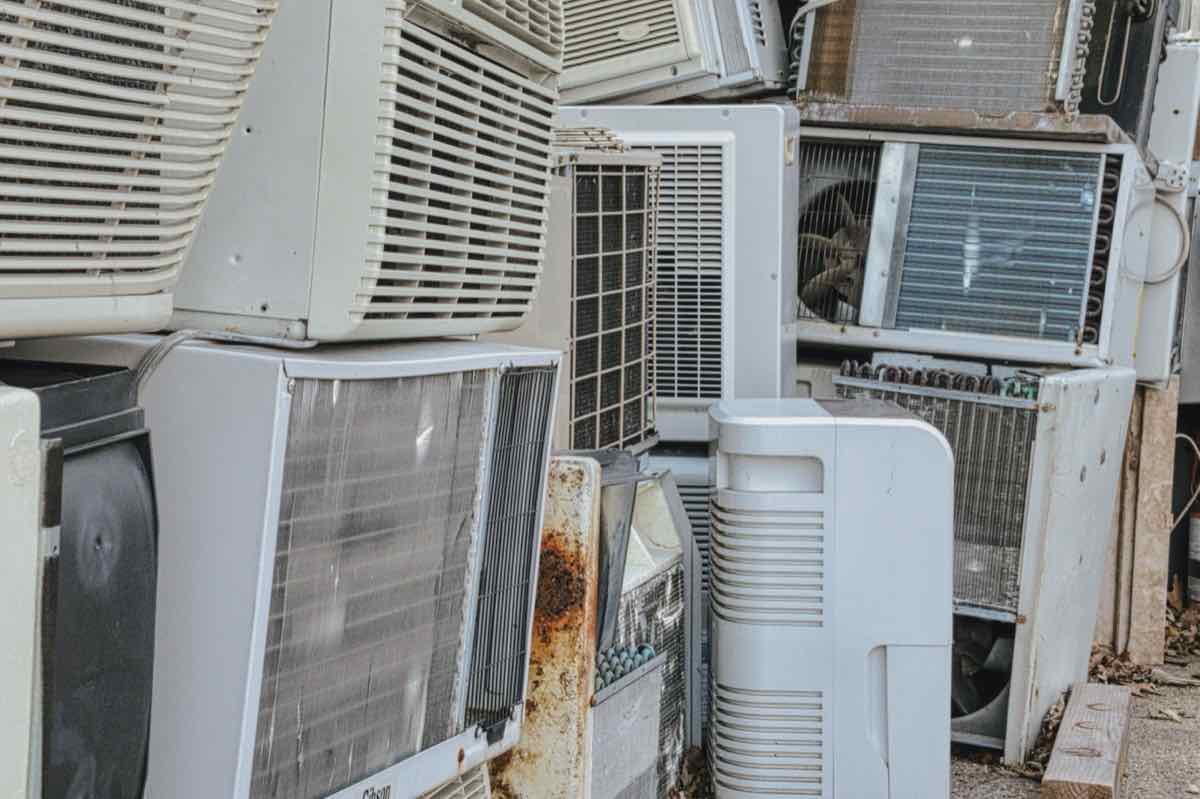
- Window & portable AC units: $80-$150 (refrigerant recovery included)
Those are typical industry ranges, not a locked-in quote — the exact number depends on access (a basement fridge costs more to move than a kitchen one), how many units you're clearing at once, and whether it's a standalone pickup or part of a bigger cleanout. Bundling appliances with a larger junk removal or garage cleanout almost always brings the per-unit cost down.
The Weight Problem Nobody Mentions
Cost guides love to talk about refrigerant and fees. They rarely mention that a full-size refrigerator averages around 250 pounds — and a French-door model with the water/ice hookups can push past 300. A washer runs roughly 170 pounds, a dryer around 125, and a standard range near 175. None of that is a one-person job, and none of it is safe to walk down a flight of basement stairs solo.
This is the part that actually hurts people: appliance injuries from DIY moves are overwhelmingly back and finger injuries from exactly this — misjudging the weight, losing grip on a stairwell, or trying to tip a fridge through a doorway alone. A dolly helps. Two people help more.
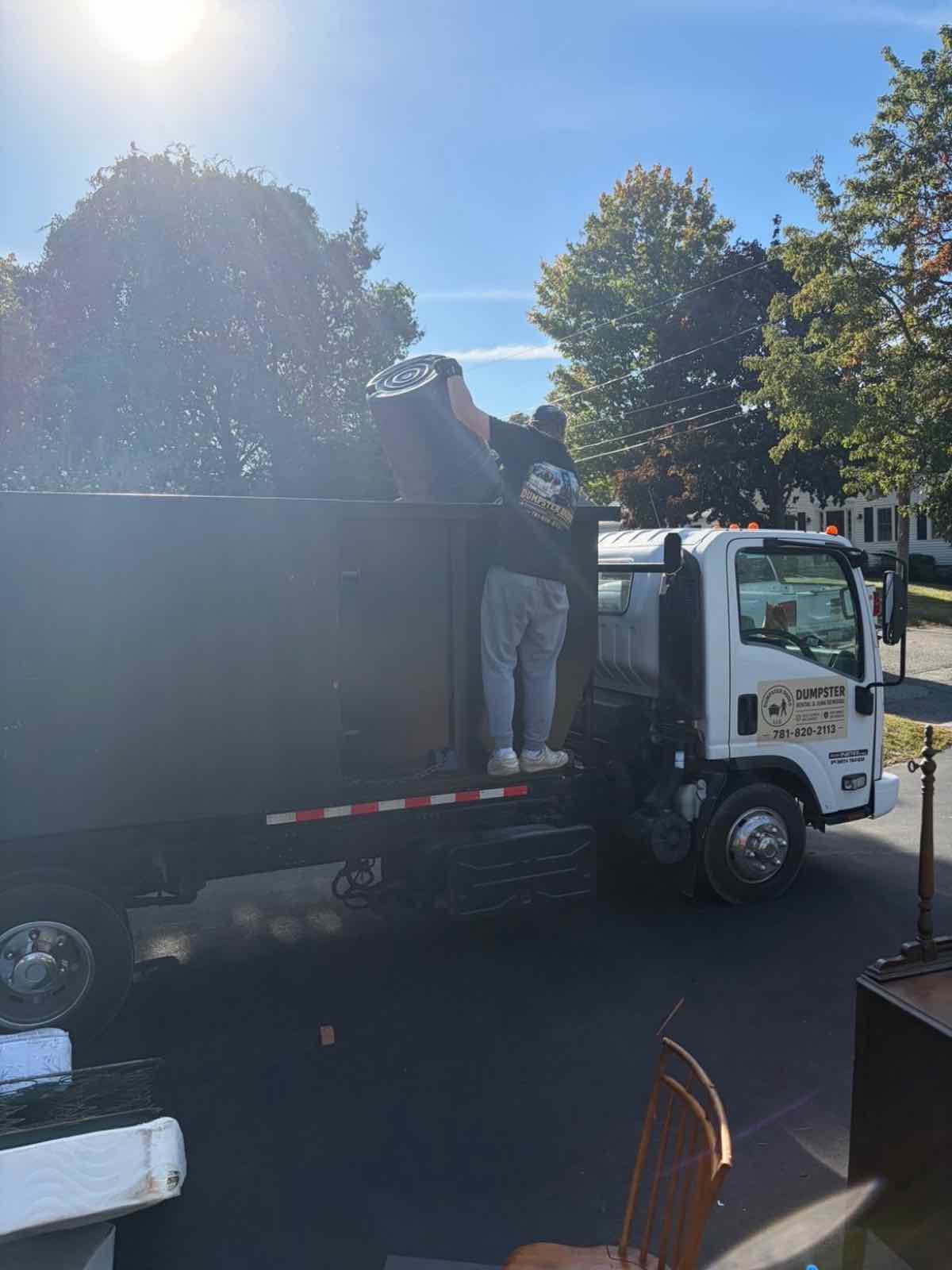
The deal is simple: you point at what's going, we carry it out. No lifting, no renting a dolly, no putting your back on the line for a dead chest freezer. We ran junk pickups across Hull last season on the same model — homeowner picked what left the house, crew did every bit of the physical work.
Get a Free EstimateDIY Drop-Off, Curbside, or Hire It Out?
Self-hauling an appliance is possible, but it's rarely as simple as it sounds on the South Shore. Towns that run their own transfer station generally accept appliances, but almost always charge a separate per-unit fee on top of your regular permit or sticker — Hingham's fee schedule, for example, lists large appliances at $25 each, with Freon-containing units called out separately. Duxbury's transfer facility itemizes it even further, charging $20 for general white goods but only $15 for units where the Freon has already been removed — which tells you plainly that the facility is pricing in the refrigerant-recovery labor, not just the metal.
Curbside pickup exists in some towns too, but it's usually appointment-only and conditional on proof the refrigerant was already recovered — show up without that, and the unit often just gets left on the curb. None of that labor disappears if you DIY it; it just shifts onto you to find a certified technician first, schedule a drop-off, and still move 250 pounds of metal out of your house on your own. For most people, that adds up to more hassle than the removal fee it was supposed to save.
How to Keep the Cost Down
- Bundle appliances together. Clearing a fridge, washer, and dryer in one visit is almost always cheaper per-unit than three separate pickups.
- Pair it with a bigger job. If you're already doing a garage cleanout or whole-house cleanout, roll the appliance into that quote instead of booking it separately.
- Donate what still works. A functioning fridge or washer is often worth more to a local reuse organization than scrap value — and some will pick up for free.
- Clear the path first. A fridge blocked by boxes or furniture adds time the crew has to bill for. Give it a clear shot to the door.
How This Fits a Bigger Cleanout
Appliances rarely show up alone. They're usually part of a garage cleanout that's been put off for a year, a kitchen renovation clearing out the old lineup at once, or a whole-house cleanout where every major appliance needs to go in the same week. If that's the situation you're in, our whole-house cleanout guide walks through how a multi-room job actually gets scheduled, and our junk removal pricing breakdown explains how appliance fees typically get folded into a larger quote rather than billed as a pile of separate line items. You can also see the full list of what we haul on our services page.
Related Guides
- Scrap metal removal — what happens to appliances once the refrigerant is recovered
- Furniture & mattress removal — often bundled with an appliance pickup
- Hazardous waste removal — for anything beyond what a standard pickup covers
Areas We Serve
We handle appliance removal and junk hauling across the South Shore, including:
Sources: EPA — Section 608 Appliance Disposal Requirements, MassDEP — Prohibitions on Certain Hydrofluorocarbons (310 CMR 7.76), Town of Hingham — Transfer Station Fee Schedule.
Frequently Asked Questions
How much does appliance removal cost on the South Shore?
Most single appliances run $80-$250 to remove, depending on type and access. Refrigerators, freezers, and air conditioners usually land at the higher end of that range because they contain refrigerant that has to be professionally recovered before the unit can be recycled or scrapped.
Why do refrigerators and freezers cost more to remove than other junk?
They contain refrigerant (commonly called Freon), and federal law under EPA Section 608 makes the final disposer responsible for having that refrigerant recovered by a certified technician before the appliance is scrapped or recycled. That labor and certification is a real cost, not an arbitrary upcharge.
Can I just put an old refrigerator in a dumpster?
No. Massachusetts bans large appliances from general disposal, and most dumpster rental agreements specifically exclude refrigerant-containing units unless the Freon has already been professionally recovered and documented.
Do I need to disconnect my washer, dryer, or stove before pickup?
For a full-service removal, no — we handle disconnecting water lines, dryer vents, and standard power cords. Gas lines and hardwired 240V connections should be shut off and disconnected by a licensed plumber or electrician first for safety.
Will my town pick up an old refrigerator or AC unit curbside?
Some South Shore towns do, but almost always require a separate scheduled call, a sticker, and proof the refrigerant was professionally removed before they'll take it. Check your town's transfer station or DPW page before setting one at the curb — an unflagged unit often just gets left behind.
What happens to the appliance after you take it?
Working units go to donation first when possible. Everything else goes to a licensed facility where refrigerant is recovered and the metal, plastic, and components are recycled rather than landfilled.
Can you remove a built-in dishwasher or wall oven?
Yes, though built-in appliances take longer since they're usually screwed into cabinetry and wired or plumbed in place. Mention it's a built-in when you call so we bring the right tools and quote it accurately.