
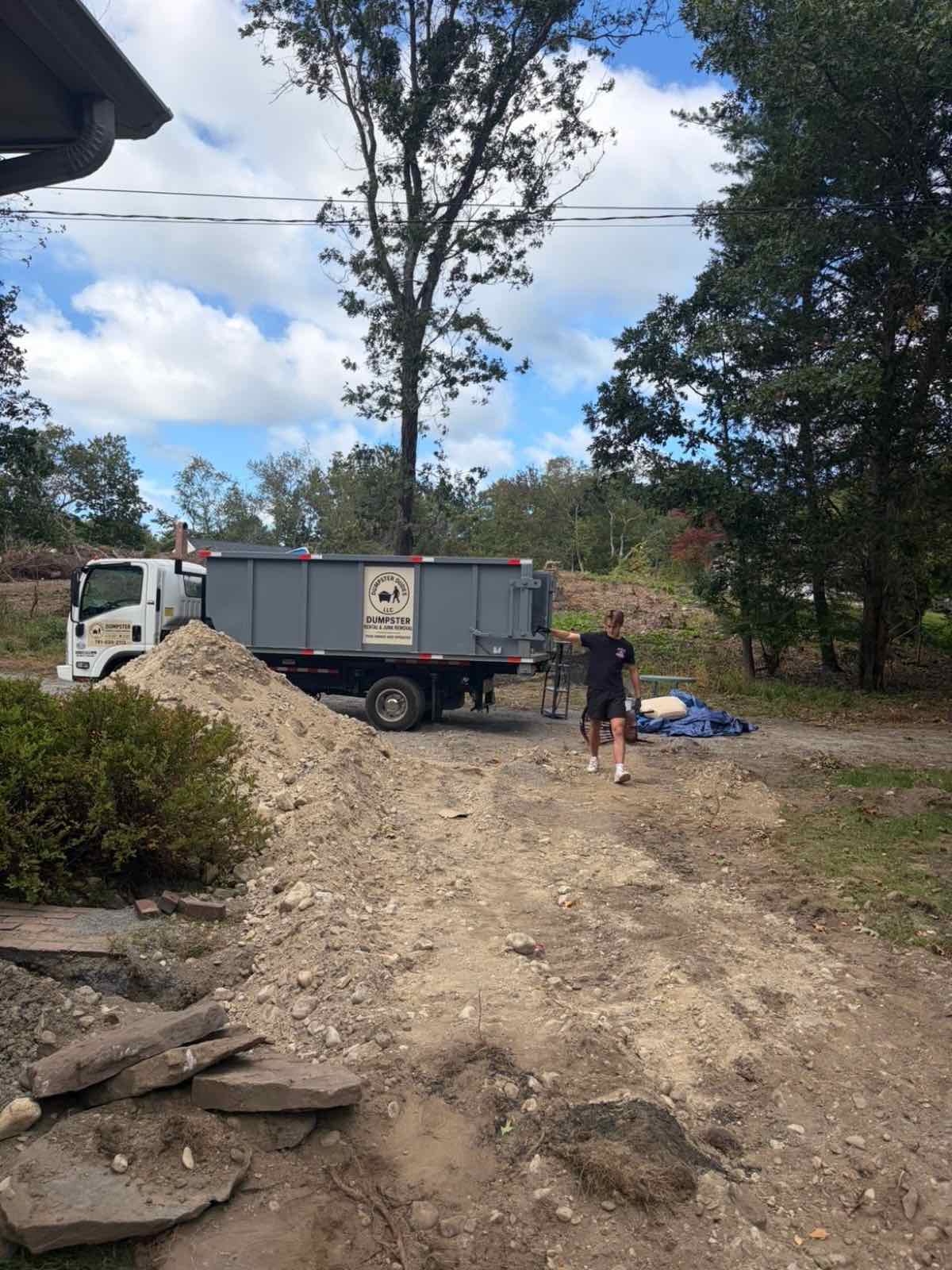
Quick answer: construction debris removal on the South Shore typically runs $300-$1,000 for a standard load, and the number that actually matters is weight, not how full the dumpster looks - a half-empty container of drywall and shingles can already be at its weight limit. (That's the whole article in one sentence - but the part that saves you money is knowing why weight sneaks up on even experienced contractors.)
Every renovation and new build on the South Shore generates debris that looks nothing like household junk. Drywall, framing lumber, roofing shingles, old flooring, ripped-out fixtures - it piles up fast, and it's dense in a way that a couch and some boxed-up clothes never are. Whether you're a contractor running three job sites a week or a homeowner mid-renovation watching the dumpster fill up faster than expected, the questions are the same: how much is this actually going to cost, dumpster or pickup, and how do you keep the site clean without getting in your own subs' way. Here's what we tell every job site we work on across Hingham, Cohasset, Scituate, and the rest of the South Shore.
What Counts as Construction Debris (And Why It's Not the Same as Junk)
Construction and demolition debris - C&D debris, in industry shorthand - is a specific category: drywall, lumber and framing scrap, roofing shingles, flooring (hardwood, tile, vinyl), old fixtures like cabinets, vanities, doors, and windows, plus metal flashing and trim. It's different from household junk not just in what it is, but in how it has to be handled. Massachusetts has banned several of these materials from landfills outright since 2006 under MassDEP's construction and demolition waste bans (310 CMR 19.017) - asphalt pavement, brick, concrete, metal, and wood can't be landfilled, and clean gypsum wallboard joined the list in 2011. That means your debris has to go to a licensed C&D processing facility, not just any dump. A junk removal truck built for couches and old TVs isn't set up for that routing - a dumpster or hauler that actually works construction sites is.
Why Weight Matters More Than Volume on a Job Site
This is the single biggest thing that trips up contractors and DIY renovators alike: a dumpster has two limits, a volume limit (how much physical space is inside it) and a weight limit (how much the hauling truck is legally allowed to carry), and on a construction job, you almost always hit the weight limit first. A single 4x8 sheet of half-inch drywall weighs close to 50 pounds. A bundle of asphalt shingles runs 60-80 pounds, and a bundle of slate shingles can hit 250-350 pounds. A 15 or 20-yard dumpster typically has a weight cap in the 2-3 ton range - which sounds like a lot until you realize 60 sheets of drywall alone is already 1.5 tons, before a single stick of lumber goes in.
A dumpster that LOOKS half-empty but is already over its weight limit isn't a deal, it's a problem - overage fees show up on the invoice, and a second trip gets scheduled that nobody budgeted for. Knowing roughly what's coming out of your job - drywall-heavy demo versus a framing-lumber-heavy build versus a full roof tear-off - matters more for picking the right size than eyeballing the space inside the container.
Dumpster Rental vs. Per-Pickup Junk Removal for an Active Job Site
For a job generating debris steadily over days or weeks - a kitchen gut, a full renovation, new construction - a dumpster rental that sits on site lets your crew and subs load it continuously, at whatever pace the work actually moves, without waiting on a scheduled pickup. For a shorter job, or a single cleanout day where you want debris gone and off the property the same day, scheduled per-pickup removal makes more sense - no container sitting in the driveway for a week after the work's done.
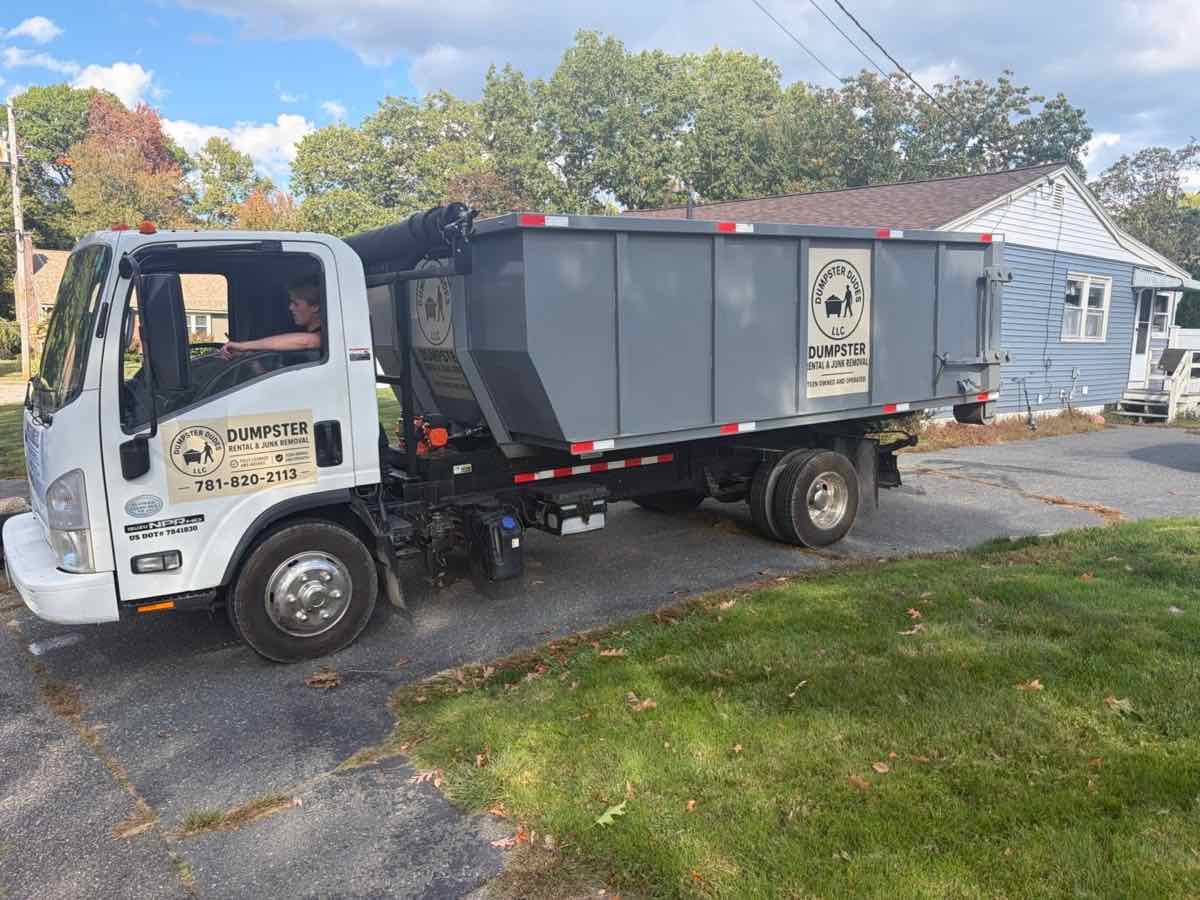
Most active job sites land on a dumpster, specifically because it removes the back-and-forth of scheduling a truck every time debris builds up. But the right call depends on your actual timeline - see our full breakdown on how junk removal pricing actually works if you're weighing the two side by side for your specific job.
Keeping the Site Clean, Safe, and Moving for Your Subs
This part doesn't get talked about enough: job-site housekeeping isn't just about looking organized, it's an actual OSHA requirement. 29 CFR 1926.25 requires that "form and scrap lumber with protruding nails, and all other debris, shall be kept cleared from work areas, passageways, and stairs," and that "combustible scrap and debris shall be removed at regular intervals during the course of construction." That's not a suggestion - housekeeping violations are consistently among OSHA's most frequently cited issues on construction sites, and a stray board with a nail sticking up is exactly the kind of thing that puts an electrician or plumber in the ER instead of on schedule.
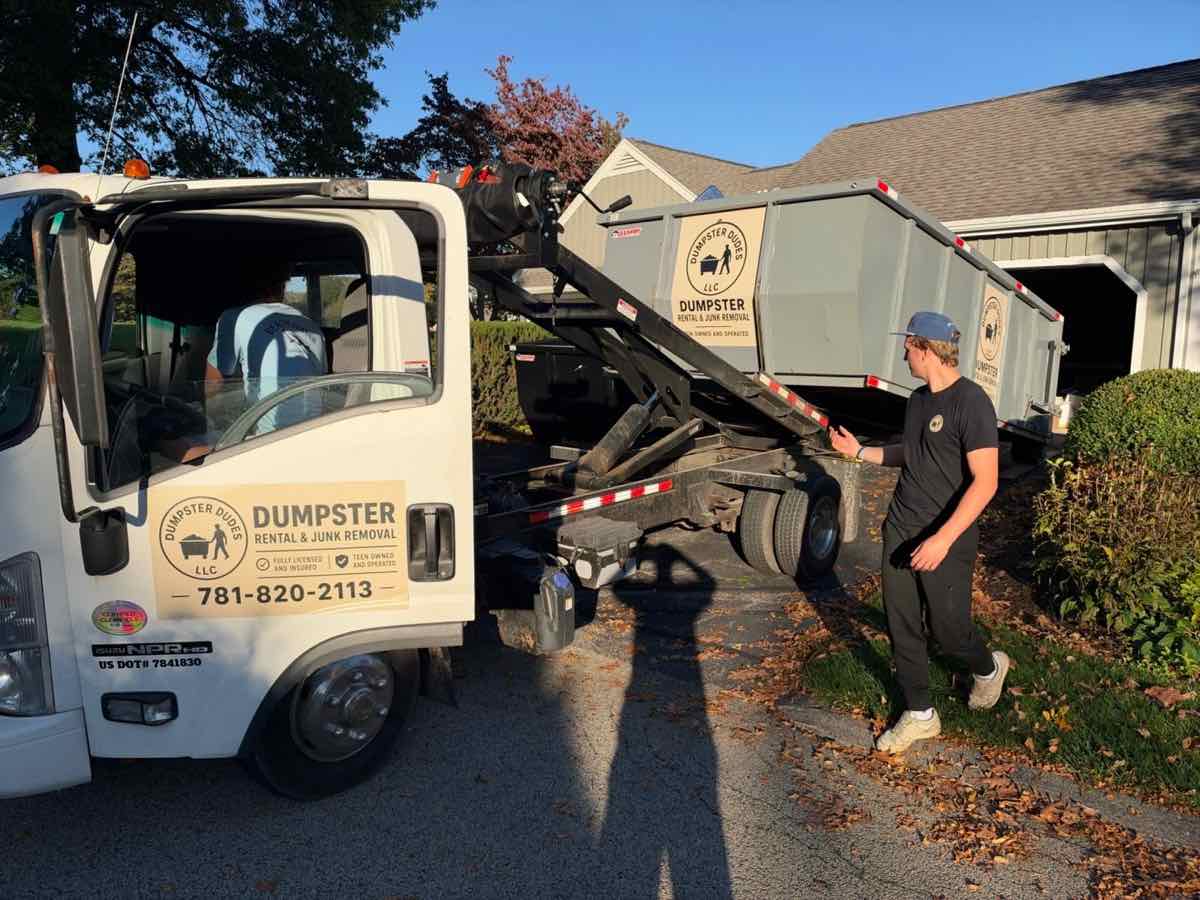
We picked up a brand-new 15-yard dumpster from the factory on a Thursday night and had it rented out by Friday morning - that's the kind of turnaround a job site actually needs. If your framer starts Monday, we can have a dumpster sitting in the right spot before their truck even pulls in.
Get a Job Site QuoteThe other half of this is scheduling. A dumpster dropped in the wrong spot - blocking a driveway, a trailer bay, or where the next sub needs to park - slows everyone down regardless of how clean the site is. We place it where it stays out of the way for the whole job and schedule swaps around your actual trade sequence, not a fixed calendar date that may or may not match where the work actually is that week.
Drywall, Lumber, Shingles, Flooring & Fixtures: What Actually Goes In
Most renovation and demolition debris on a South Shore job falls into a handful of categories:
- Drywall & gypsum wallboard - clean (unpainted, no joint compound contamination) gypsum has been banned from MA landfills since 2011, but it's fully acceptable in a dumpster routed to a licensed C&D processor.
- Lumber & framing scrap - untreated wood is lighter per cubic yard than most other C&D materials, but it adds up in volume fast on a framing job.
- Roofing shingles - the heaviest common material by far; a full tear-off is almost always a weight-limited job, not a volume-limited one.
- Flooring - hardwood, tile, and vinyl all go in, though old tile and hardwood with nails/adhesive adds real weight.
- Fixtures - cabinets, vanities, doors, windows, and trim from a gut renovation.
One thing worth flagging before you start tearing into an older South Shore home: Massachusetts requires an asbestos survey before demolition or renovation work on buildings where asbestos-containing materials may be present, under 310 CMR 7.15. A lot of South Shore housing stock predates the 1980s, so this is worth checking before, not after, demo day.
What Determines Your Construction Debris Removal Cost
Full-service construction debris removal averages around $450 nationally, with most jobs landing between $300 and $1,000 depending on volume and weight. Industry pricing data breaks it down roughly like this per cubic yard: construction debris runs about $95 per cubic yard to haul, compared to roughly $22 per cubic yard for general home debris - construction is priced highest of any debris category, specifically because of weight. By material, regular mixed C&D debris runs about $75 per ton, clean untreated lumber about $40 per ton, and concrete, brick, or masonry $90-$150 per ton.
The factors that actually move your price: total weight (not just how full it looks), material mix (shingles and masonry cost more than lumber), access for the truck, and how many trips a job needs. Get a straight answer on your specific job rather than guessing from a national average - every South Shore site is different.
Related Guides
- Complete dumpster rental guide — sizing, pricing, and permits for a job-site dumpster
- Dumpster size guide — matching a size to your project's debris volume
- Scrap metal removal — for rebar, pipe, and structural steel separate from the dumpster
- Commercial & property manager junk removal — for standing accounts across multiple job sites
Areas We Serve
We handle construction and contractor debris removal across the South Shore, including:
Sources: OSHA 29 CFR 1926.25 - Housekeeping, RecyclingWorks MA - Construction & Demolition Materials Guidance.
Frequently Asked Questions
How much does construction debris removal cost?
A standard load of mixed construction debris typically runs $300-$1,000, with full-service removal averaging around $450 nationally. The real driver is weight, not the size of the container - a dumpster full of drywall and shingles costs more to haul than one with the same volume of household junk.
Is construction debris heavier than household junk?
Yes, significantly. A single 4x8 sheet of drywall weighs close to 50 pounds, and a bundle of asphalt shingles runs 60-80 pounds. Industry data puts construction debris at roughly $95 per cubic yard to haul versus about $22 per cubic yard for general home debris, almost entirely because of weight.
What size dumpster do I need for a renovation project?
For most single-room renovations (a kitchen, bathroom, or bedroom gut), a 15-yard dumpster is the common default. Whole-house renovations, roof tear-offs, or additions usually need a 20-yard, and the deciding factor is almost always weight limit, not how full the container looks.
Should I rent a dumpster or hire per-pickup junk removal for a job site?
If debris is generated steadily over days or weeks - a typical renovation or new build - a dumpster that sits on site lets subs load it as they go. If it's a shorter project or a single cleanout day, scheduled pickups avoid having a container sit in the driveway for a week.
Can drywall and gypsum wallboard go in a regular dumpster in Massachusetts?
Clean gypsum wallboard has been banned from Massachusetts landfills since July 2011, so it can't just go in regular trash - but it can go in a construction debris dumpster that's routed to a licensed processing facility, which is exactly how we handle it.
Do I need a permit for a dumpster on my South Shore property?
It depends on placement - a dumpster sitting entirely on a private driveway typically doesn't need a town permit, but one that extends into the street or a public way usually does. We'll tell you straight if your site needs one before delivery day.
How do you keep a job site clean without slowing down the subs?
We place the dumpster where it won't block truck or trailer access, schedule swaps around your trade sequence instead of a fixed calendar day, and keep debris moving out of walkways and stairs - which is also an OSHA housekeeping requirement under 29 CFR 1926.25, not just a courtesy.