
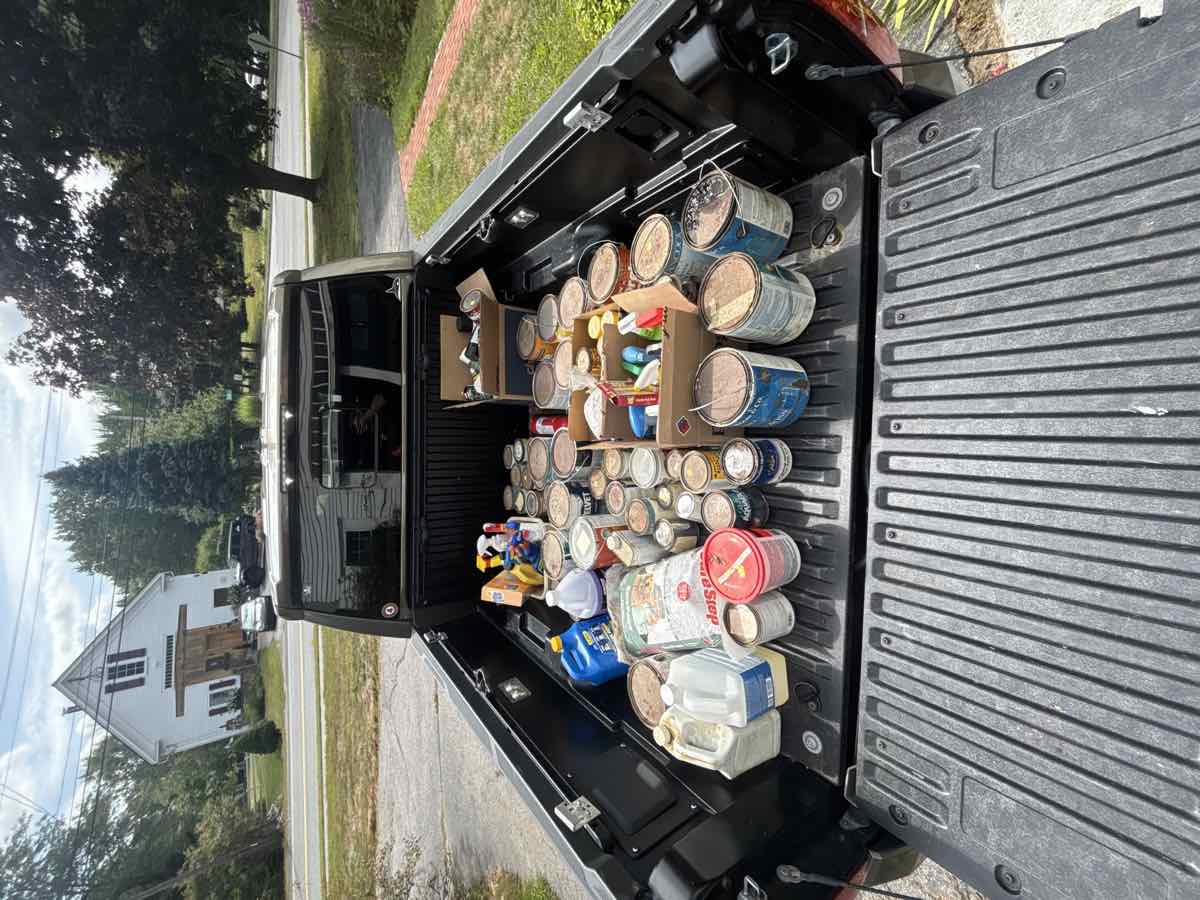
Quick answer: in Massachusetts, oil-based paints, motor oil, pesticides, and most household chemicals are regulated as hazardous waste and can't go in your regular trash. Latex (water-based) paint is the big exception — once it's dried out, it's not hazardous and can be thrown away normally. We remove both, but they don't leave your property the same way. (One of these facts saves you a special disposal trip. The other one doesn't. Keep reading to find out which is which.)
Almost every cleanout turns up something that isn't just "junk" — a shelf of half-used paint cans, a jug of old motor oil, pesticide from three summers ago, a car battery nobody remembers buying. Most of it has been sitting there because nobody's sure what's actually allowed in the trash and what isn't. This guide breaks down what counts as household hazardous waste (HHW), what Massachusetts law actually requires, and how we get it out of your house responsibly across the South Shore.
Get A Free Hazardous Waste Removal Quote
Fill this out or call 781-820-2113 and we'll get back to you with an upfront price, usually same-day.
The Paint Rule Everyone Gets Wrong
Paint is the single most common source of confusion, so let's settle it first: under MassDEP's guidance on managing hazardous household products, latex (water-based) paint is not regulated as hazardous waste once it's fully dried out. Dry it with kitty litter or a commercial paint hardener, leave the can open in a well-ventilated area, and once solid it can go in the regular trash.
Oil-based paint, stains, and varnishes are a different story — they're treated as hazardous waste without exception and need to go through a household hazardous waste collection program, not the trash. The easy way to tell them apart: if cleanup calls for soap and water, it's latex. If it calls for mineral spirits or paint thinner, it's oil-based, and it needs to be handled accordingly.
What Actually Counts as Household Hazardous Waste
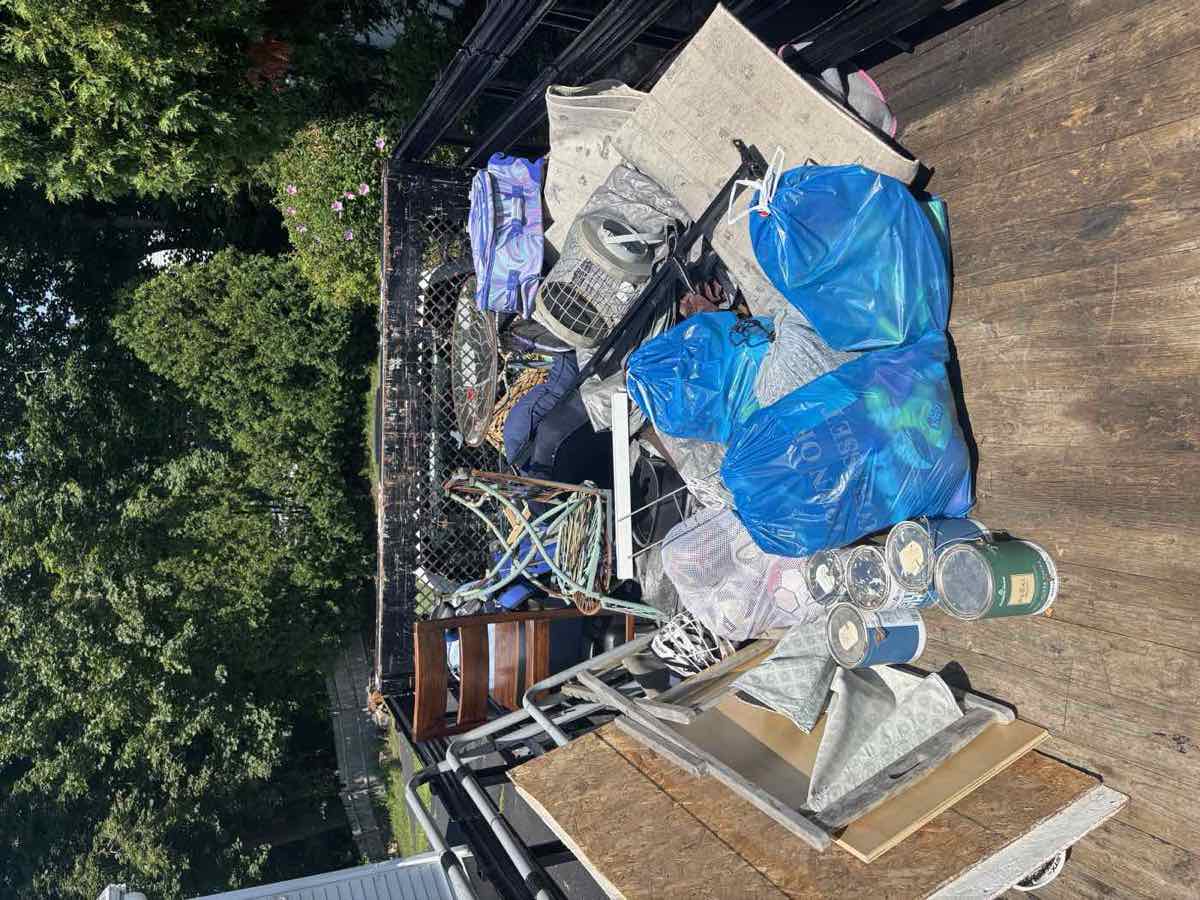
Per EPA guidance on household hazardous waste, HHW is any leftover household product that's corrosive, toxic, ignitable, or reactive. In practice, the calls we get most often involve:
- Oil-based paints, stains, and varnishes
- Motor oil, antifreeze, and other automotive fluids
- Pesticides, herbicides, and lawn chemicals
- Household cleaners, drain openers, and pool chemicals
- Car and household batteries
- Fluorescent bulbs and CFLs (they contain mercury)
- Propane tanks and other compressed gas containers
- Old gasoline, kerosene, and other fuels
A few related categories get handled a little differently because they're covered by their own specific rules rather than general HHW guidance — appliances with refrigerant and electronics, covered next.
Why the Classification Actually Matters
This isn't just paperwork. Ignitable and reactive materials in a trash truck or landfill are a genuine safety risk, not a technicality — it's the reason these categories are regulated in the first place. A couple of examples worth knowing:
- Appliances with refrigerant (fridges, freezers, window AC units) require certified refrigerant recovery before disposal under EPA Section 608 of the Clean Air Act — skipping that step is a real violation, not just poor practice.
- Electronics should go through certified recyclers rather than general trash, per EPA e-waste guidance — recycling a single laptop recovers real material value that a landfill just buries.
Here's an opinion we'll state plainly: treating hazardous waste like regular junk isn't a shortcut, it's a liability — for the environment, for whoever handles it next, and legally for whoever generated it. We'd rather spend the extra ten minutes sorting it correctly than cut that corner.
You tell us what needs to go, and we sort out what's regular junk versus what needs special handling — you don't have to know the rules yourself, that's on us.
Get a Free QuoteHow We Handle It: Our Disposal Partnerships
We work with transfer stations and disposal partners across Eastern Massachusetts, with Recycling Solutions in Raynham as our main partner for general bulky waste. Hazardous materials specifically get routed through certified facilities equipped to handle them properly — oil-based paint and chemicals to hazardous waste processors, refrigerant recovered from appliances before they're scrapped, electronics to certified e-waste recyclers. Nothing hazardous gets mixed in with a general junk load; it's sorted and routed separately from the start.
That network is what lets us say yes to almost any hazardous waste removal call across the South Shore instead of turning you away to find a specialty hauler yourself.
Our Hazardous Waste Removal Process
- Tell us what you've got: Call, text, or send photos — the more specific, the more accurate the plan.
- We sort it: On arrival, we separate hazardous items from general junk before anything gets loaded.
- Proper routing: Hazardous materials go to the appropriate certified facility, not a general transfer station.
- Everything else: Non-hazardous junk gets handled the normal way — donate first, recycle second, disposal last.
Related Guides
Hazardous waste often turns up during a bigger job — these guides go deeper on the rest of it:
- Where your junk actually goes — our full donate/recycle/dispose breakdown
- Basement cleanout guide — where old paint and chemicals turn up most often
- Garage cleanout guide — same story, different room
- Full service list
Areas We Serve
Our hazardous waste disposal partnerships cover the entire South Shore, including:
Frequently Asked Questions
Is latex paint hazardous waste in Massachusetts?
No. Under MassDEP guidance, latex (water-based) paint is not regulated as hazardous waste once it's fully dried and hardened — it can go in the regular trash. Oil-based paint is different and is treated as hazardous waste without exception.
How do I know if my paint is latex or oil-based?
Check the label or cleanup instructions: if brushes clean up with soap and water, it's water-based (latex). If cleanup requires mineral spirits or paint thinner, it's oil-based — and it should be handled as hazardous waste.
What items count as household hazardous waste?
Common HHW includes oil-based paints and stains, motor oil and automotive fluids, pesticides and lawn chemicals, household cleaners and drain openers, batteries, fluorescent bulbs, propane tanks, and certain electronics.
Can you remove hazardous waste along with regular junk?
We can remove most hazardous items as part of a cleanout, but they're handled separately from general junk through our disposal partnerships rather than loaded in with everything else. We'll flag anything that needs special handling before pickup.
What happens if hazardous waste is thrown in the regular trash?
It's against Massachusetts regulations, and it creates real environmental and safety risk — ignitable or reactive materials in a trash truck or landfill are a genuine hazard, not just a technicality.
Do you handle electronics and appliance disposal too?
Yes. Appliances with refrigerant require certified recovery before disposal under federal rules, and electronics are routed through certified recyclers rather than general trash — both handled through our disposal network.
Which South Shore towns do you handle hazardous waste for?
All of them. Our disposal partnerships cover hazardous waste pickup throughout the South Shore, not just one or two towns.