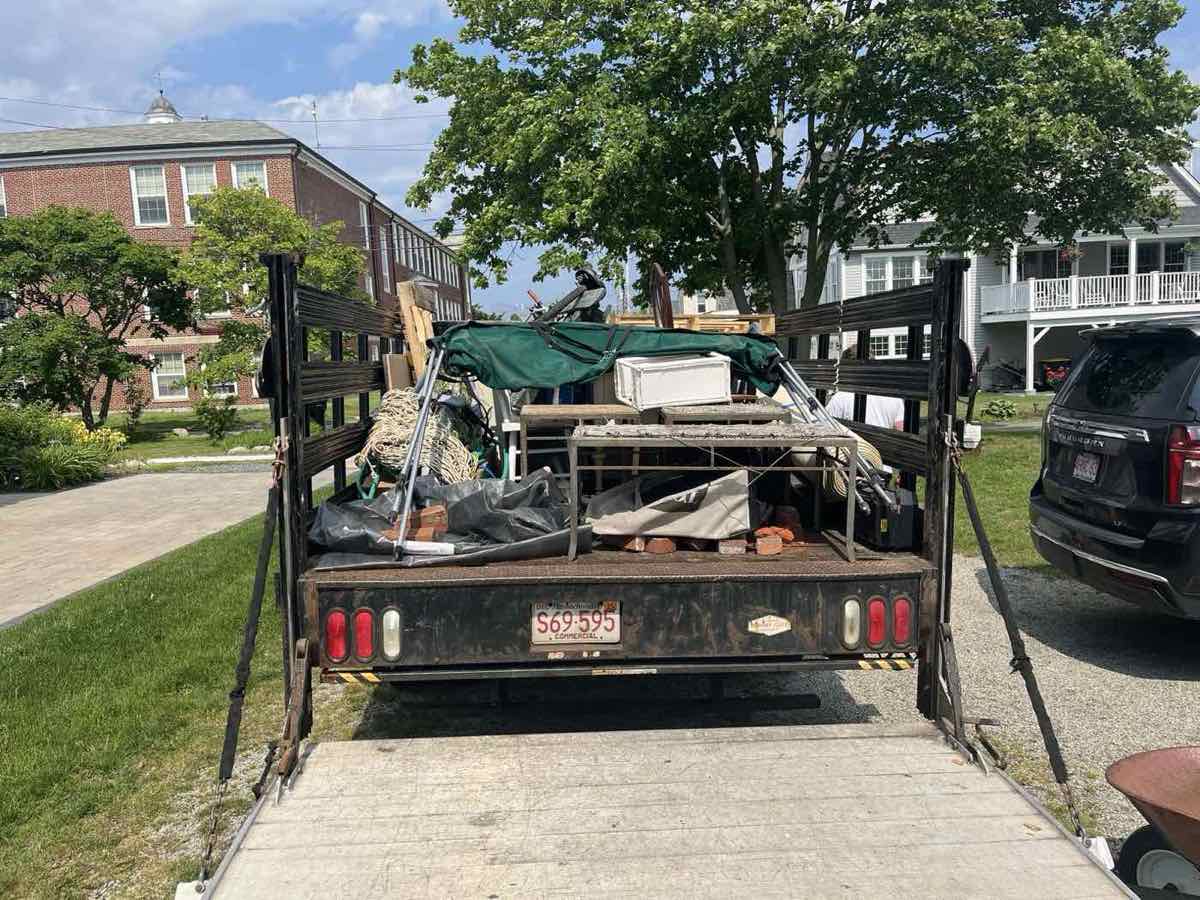
Quick answer: not the landfill, at least not first. We donate what's still usable, recycle what can be processed, and only send the rest to disposal — most of that bulky, non-recyclable material goes to our main partner, Recycling Solutions, a transfer station in Raynham, MA. (We realize "it depends on the item" isn't the most satisfying answer, but the breakdown below is genuinely more interesting than a landfill photo, we promise.)
It's a fair question, and one most junk removal companies never actually answer: once your stuff is on the truck, where does it go? We work with transfer stations and donation partners across Eastern Massachusetts, but our main partner is Recycling Solutions in Raynham, and that's where the bulk of our non-donatable material ends up. This guide walks through exactly how that process works — donation, recycling, transfer stations, and the Massachusetts laws that shape all of it.
Want It Handled The Right Way? Get A Free Quote
Fill this out or call 781-820-2113 and we'll get back to you with an upfront price, usually same-day.
Donate, Recycle, Dispose: The Order We Actually Follow
Every load we haul gets sorted into three streams, in this order of preference:
- Donation: Furniture, household goods, and clothing in usable condition go to partner donation centers first.
- Recycling: Metal, cardboard, appliances, electronics, and other processable materials get pulled out and routed to recycling.
- Disposal: Whatever is left — broken, contaminated, or simply not recyclable — goes to our transfer station partner as a last resort.
Here's an opinion we'll state plainly: the easiest thing in this business is to skip the sorting and send every load straight to disposal. It's faster and it's cheaper. We don't do it that way, because "we're a green company" is a meaningless line if the truck goes straight to the same place either way.
Donation First: Our Partner Network
Before anything gets recycled or disposed of, we look at what's still usable. Furniture, working appliances, clothing, and household goods in good condition go to partner donation centers, including Savers, Goodwill, and the Salvation Army — organizations that put those items back into the community instead of a landfill.
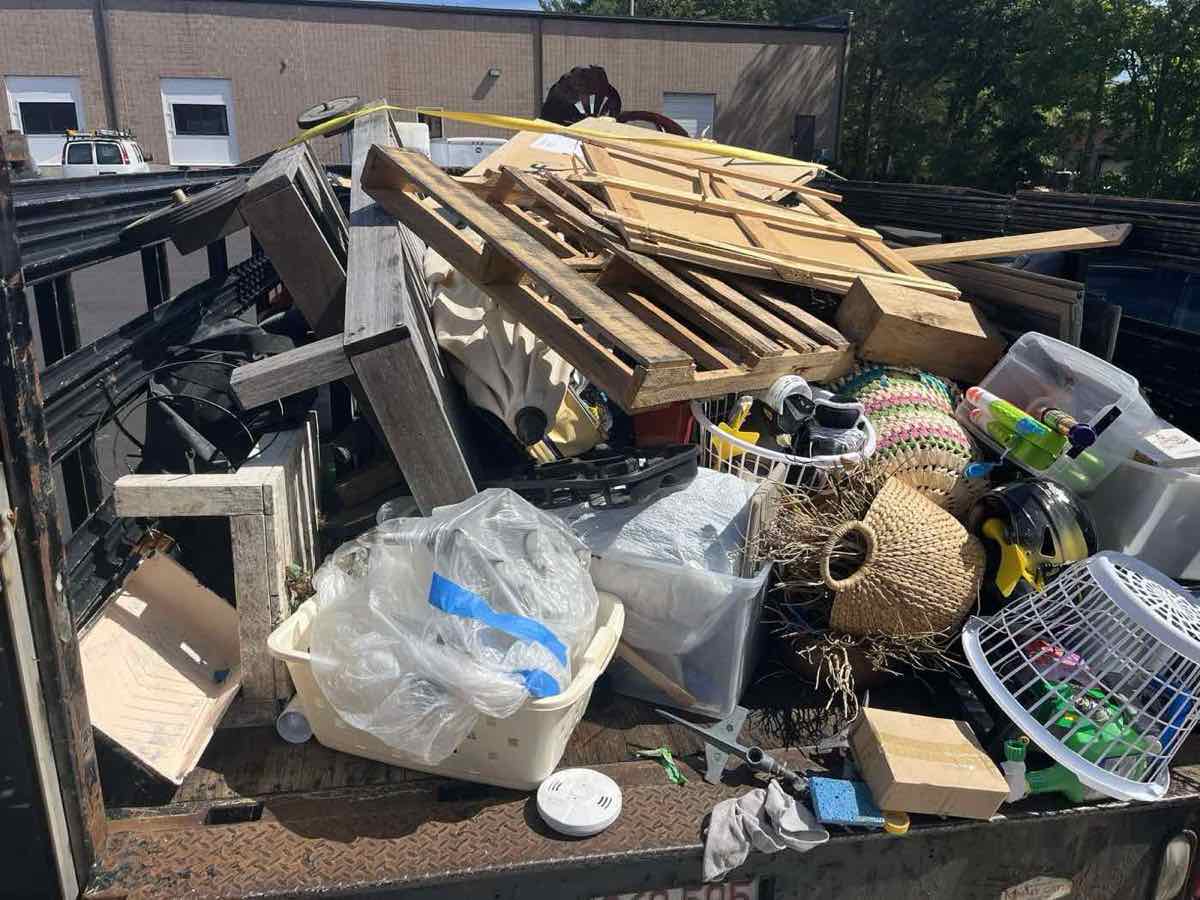
You tell us what to toss, and we do all the heavy lifting — including figuring out what's still good enough to donate instead of dumped. That's part of the job, not an add-on.
Get a Free QuoteWhat We Recycle (And Why It Matters)
Recycling is the second stop for anything that's not donation-worthy but still has value as a raw material. That typically includes:
- Scrap metal — appliances, furniture frames, fencing, and fixtures
- Cardboard and paper from move-outs and cleanouts
- Wood, where it's clean enough to process
- Electronics — TVs, computers, and similar e-waste, which the EPA specifically recommends recycling through certified processors rather than tossing with general trash
Recycling isn't just an environmental nicety here — for several of these categories, it's the law. More on that below.
Our Main Partner: Recycling Solutions in Raynham, MA
We work with transfer stations and haulers across Eastern Massachusetts depending on the job, but our main partner is Recycling Solutions, a transfer station based in Raynham, MA. That's where the bulk of our non-donatable, non-recyclable material goes — the bulky waste that's left over once donation and recycling have already pulled out what they can.
Recycling Solutions accepts both municipal solid waste and construction & demolition debris, which matters for us because a lot of our jobs are mixed loads — a cleanout might include furniture, boxes, and a chunk of old decking all on the same truck. Having one reliable partner that can process both categories keeps a mixed job from turning into two separate drop-offs.
How Transfer Stations Actually Work
"Transfer station" gets used loosely, so here's what actually happens once a truck pulls in:
- Weigh-in: The truck crosses a scale on the way in, which determines the tipping fee based on weight.
- Unloading: Material gets unloaded onto a tipping floor — a large, covered area designed to contain everything while it's sorted.
- Sorting & screening: Staff pull out anything that shouldn't be there (batteries, certain hazardous items) and separate recoverable material.
- Consolidation: The remaining waste gets compacted and reloaded onto larger long-haul trailers, combining what would otherwise be several separate truck trips into one.
That last step is the part people usually don't picture: a transfer station isn't the final stop, it's a consolidation point. Instead of every individual truck driving all the way to a distant landfill or processing facility, the transfer station combines multiple loads onto fewer, larger trailers — which cuts down on total miles driven, fuel burned, and trucks on the road.
Dumpster Dudes was co-founded by two Tabor Academy grads now at Babson College — when we say we personally sort what gets donated, recycled, or hauled to Raynham, that's not a corporate sustainability slide, it's two guys from the South Shore making that call on every job.
Massachusetts Waste Disposal Laws You Should Know
A lot of what gets recycled instead of landfilled isn't optional — Massachusetts has a MassDEP waste disposal ban list that legally prohibits certain materials from going to a landfill or incinerator at all. A few that come up constantly in residential cleanouts:
- Mattresses and textiles: added to the banned list in 2022 — they have to be recycled or reused, not landfilled.
- Electronics: cathode ray tubes, computers, and monitors have been banned from disposal since 2000, with recycling required instead.
- Construction & demolition materials, metal, and cardboard: also on the list, which is part of why a transfer station that handles both MSW and C&D — like our Raynham partner — is useful for mixed cleanout jobs.
Violations of these bans can carry real penalties, which is exactly why sorting before disposal isn't just a nice-to-have for a junk removal company — it's how you stay compliant while running actual volume.
What Can't Be Donated or Recycled
Disposal is the last stop, not the first, but it's still a real part of the process. Items that are too damaged, contaminated, or simply not accepted by donation centers or recyclers — think heavily water-damaged furniture, certain treated materials, or general debris — go to our transfer station partner to be processed and moved to its final destination. It's a small share of most loads, but it's an honest one: not everything can be saved, and we'd rather say that plainly than pretend every single item gets a second life.

Related Guides
If you're planning a specific job and want to know what typically happens to that kind of load, these guides go deeper:
- Basement cleanout guide — including how we handle water-damaged items
- Garage cleanout guide — including paint, oil, and chemical disposal rules
- How junk removal pricing works — why certain materials cost more to process
- Full service list
Areas We Serve
We pick up and sort loads throughout the South Shore, routing donations, recyclables, and disposal to the right partner regardless of which town the job's in:
Frequently Asked Questions
Does everything you pick up end up in a landfill?
No. We donate and recycle whenever possible and only send items to disposal as a last resort. Landfill is where the leftover, non-recyclable, non-donatable material ends up — not the default.
What happens to items you recycle?
Recyclable materials — metal, cardboard, wood, appliances, electronics — are separated out and sent to certified recycling facilities rather than mixed in with general waste.
Where do donated items go?
Usable furniture, household goods, and clothing go to partner donation centers such as Savers, Goodwill, and the Salvation Army, where they get a second life instead of taking up landfill space.
What is Recycling Solutions in Raynham, MA?
Recycling Solutions is our main transfer station partner — a licensed facility in Raynham, MA that accepts and processes bulky waste from junk removal companies across Eastern Massachusetts. It's where most of our non-donatable, non-recyclable material ends up.
Is it illegal to throw away a mattress in Massachusetts?
Yes. Massachusetts added mattresses and textiles to its banned disposal list in 2022, meaning they legally have to be recycled or reused rather than landfilled or incinerated.
How do transfer stations work?
Trucks get weighed, unload onto a sorting floor, and the material gets screened, sorted, and consolidated onto larger trailers for transport to recycling processors or final disposal sites. It's a middle step, not a final destination.
Do you provide donation receipts?
We can help point you toward documentation for items dropped at partner donation centers — just ask when you book, since receipt processes vary by organization.