
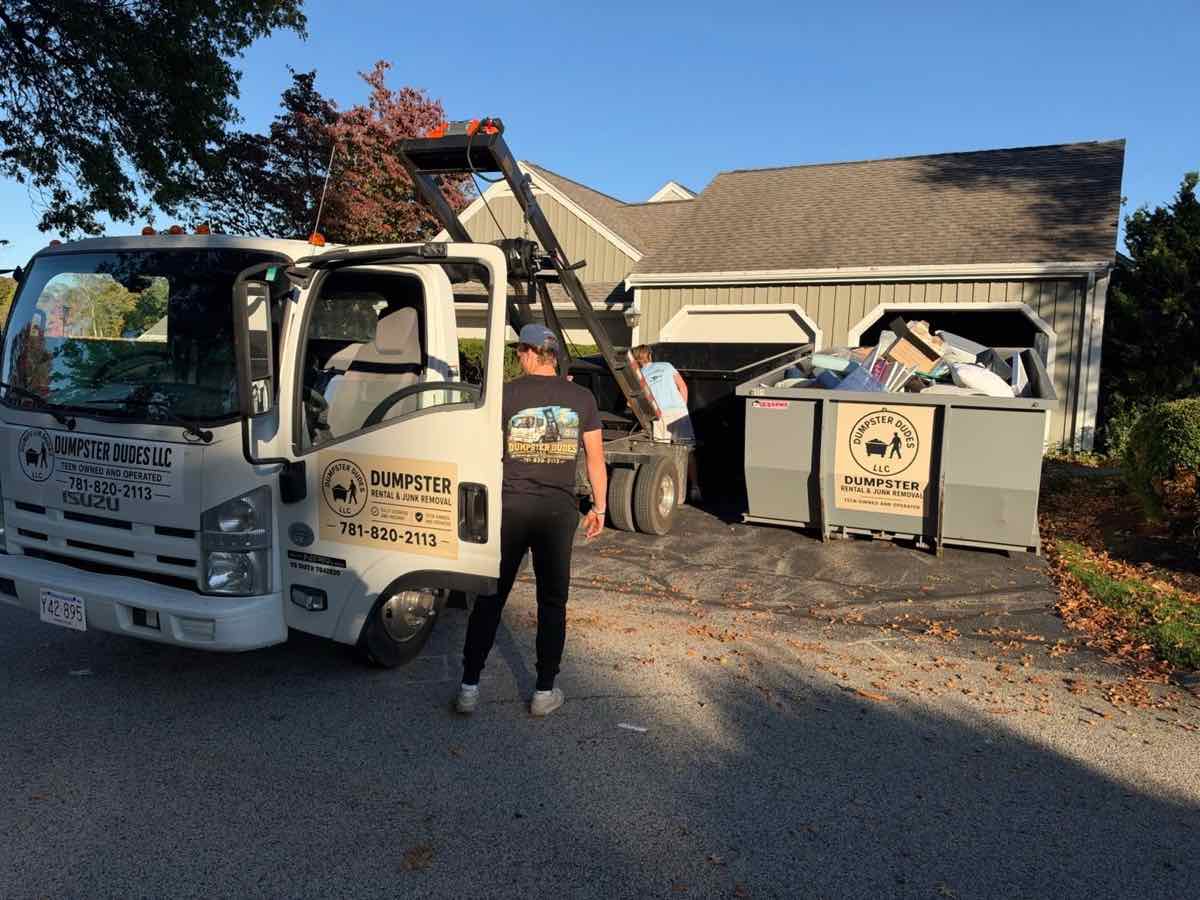
Quick answer: a standard South Shore dumpster rental runs about $250-$550, driven mostly by size (15-yard vs. 20-yard) and how heavy the debris is — shingles and concrete cost more to haul than a garage full of boxes. (Yes, that's the whole pricing question answered in one sentence. Keep reading anyway, because the size you actually need and whether you need a permit are the two things that'll save or cost you real money.)
Renting a dumpster on the South Shore sounds simple until you're actually doing it — then suddenly you're staring down questions about yard sizes, whether your town requires a permit for a driveway, and whether that old recliner and the five-gallon bucket of leftover deck stain can go in together. This guide covers all of it: real size and price ranges, what's allowed in and what isn't, the permit rules that actually apply in Massachusetts, and exactly how the process runs from the first call to the truck pulling away.
How Much Does a Dumpster Rental Cost on the South Shore?
Industry-wide, dumpster rental pricing clusters around a national average of roughly $385-$442, with most homeowners landing somewhere between $294 and $564 depending on size and location. Broken down by size, a 10-yard typically runs $250-$450, a 20-yard $350-$550, and a 30 or 40-yard (usually reserved for bigger construction jobs) $400-$800 or more. Those are third-party market ranges, not a quote — but they're a realistic starting point before you call anyone.
What actually moves the number within that range: the weight of what's going in (a dumpster full of shingles or concrete weighs a lot more than the same volume of cardboard and furniture), how long you keep it, and how far the truck has to drive. We only run two sizes — 15 and 20-yard — specifically so pricing stays simple instead of turning into a confusing ten-tier menu. Head to our dumpster rental service page to request an exact quote; we quote upfront, before anything gets hauled.
Dumpster Sizes, Explained (10, 15, 20 & 30-Yard)
Most dumpster companies nationally carry a range from 10 yards up to 30 or even 40 yards. In practice, almost no South Shore residential job needs anything past 20 yards — that range exists mostly for large commercial demolition and new construction sites, not a garage cleanout or a bathroom remodel.
- 10-yard: Small jobs — a single-room declutter, a few pieces of furniture, a small yard cleanup. Rare for us to deliver on its own.
- 15-yard: Our most-booked size, and the right call for single-room cleanouts, garage or basement clear-outs, and small renovations. Holds roughly 6 pickup truck loads and fits most South Shore driveways without issue.
- 20-yard: For when a 15 won't cut it — whole-house cleanouts, bigger renovations, roofing or siding jobs. Holds roughly 8 pickup truck loads and still fits most residential driveways.
- 30-yard and up: New construction, major demolition, commercial projects. Outside the scope of almost every residential South Shore job.
Here's an opinion we'll stand behind: 15 yards is the right size for most residential cleanouts, and we'd rather steer you to the smaller, cheaper option than upsell you on space you'll never fill. Oversizing doesn't make the job go faster — it just means you're paying for empty air in your driveway.
What Can (and Can't) Go In Your Dumpster
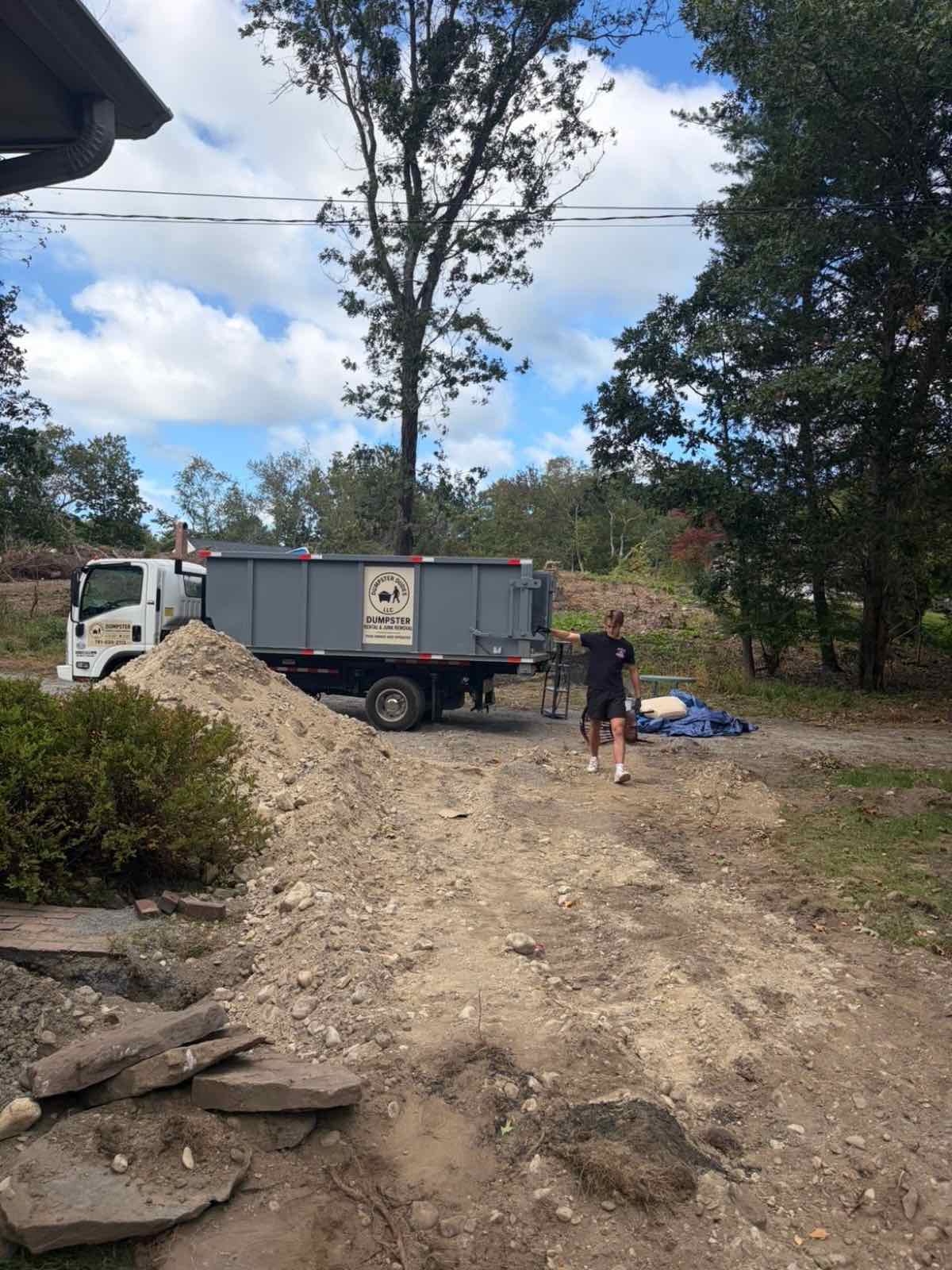
The honest answer is: almost everything you'd expect from a normal cleanout or renovation. Furniture, boxes, scrap wood, drywall, flooring, yard debris, old appliances, and general household junk are all fair game in a standard roll-off dumpster.
What doesn't go in with everything else:
- Hazardous materials — oil-based paint, solvents, pesticides, fuel, and propane tanks need separate handling, not a dumpster. (Latex paint, once fully dried, is actually fine in regular trash — see our hazardous waste removal guide for the full breakdown of what's banned versus what isn't.)
- Appliances with refrigerant — fridges, freezers, and AC units need certified refrigerant recovery before disposal under EPA Section 608 of the Clean Air Act, so they're handled separately rather than tossed in loose.
- Mattresses and most electronics — both are on Massachusetts' banned-disposal list, meaning they're legally required to be recycled rather than landfilled. We can still take them, they just get routed differently than the rest of the load.
- Tires, batteries, and asphalt/concrete in large volume — these often carry separate fees or disposal rules depending on volume, so flag them when you book.
Driveway vs. Street: Do You Need a Permit?
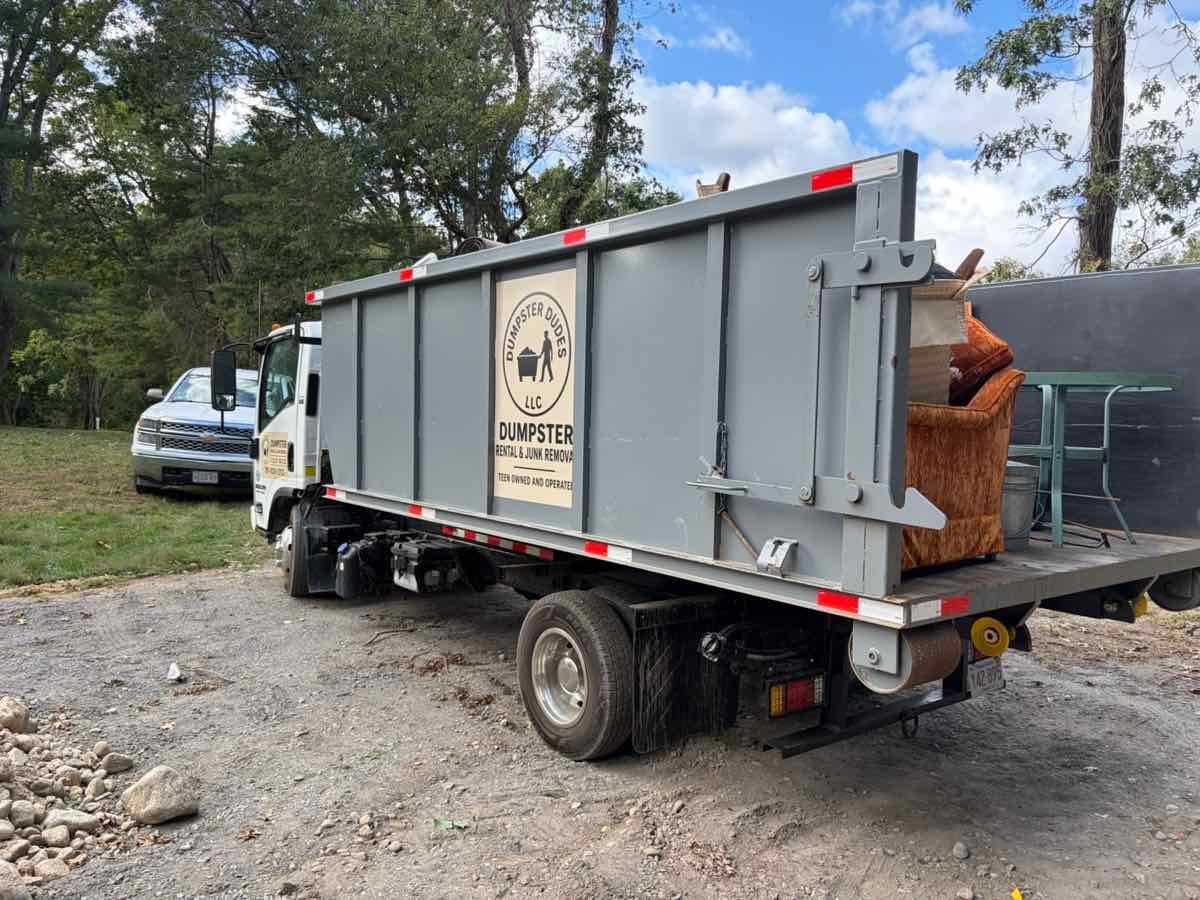
In Massachusetts, the rule that holds up across almost every South Shore town is the same one cities like Cambridge spell out in writing: a dumpster kept entirely on your own driveway or private property typically doesn't require a town permit. The moment it needs to sit in the street, on a sidewalk, or anywhere else considered a public right-of-way, that's when a dumpster or right-of-way permit from the local public works or traffic department comes into play — and most towns do require one for street placement.
Permit fees, when they're needed, generally run somewhere in the $20-$150 range nationally, and processing can take anywhere from a couple of days to a couple of weeks depending on the town. We'll flag it during scheduling if your driveway situation looks like it'll need a street placement, so it's not a surprise on delivery day — most residential jobs never need one at all.
How Dumpster Rental Actually Works, Start to Finish
- Call, text, or request a quote online. Tell us the size you think you need and roughly when — we'll confirm or adjust the size based on your job.
- We schedule delivery. Same-day or next-day delivery is often available depending on the week; the truck drops the dumpster exactly where you want it in the driveway.
- You fill it on your own schedule. No crew standing over your shoulder — load it over a day, a weekend, or the full rental period.
- Call when you're done. We swing by, haul it away, and that's the job closed out.
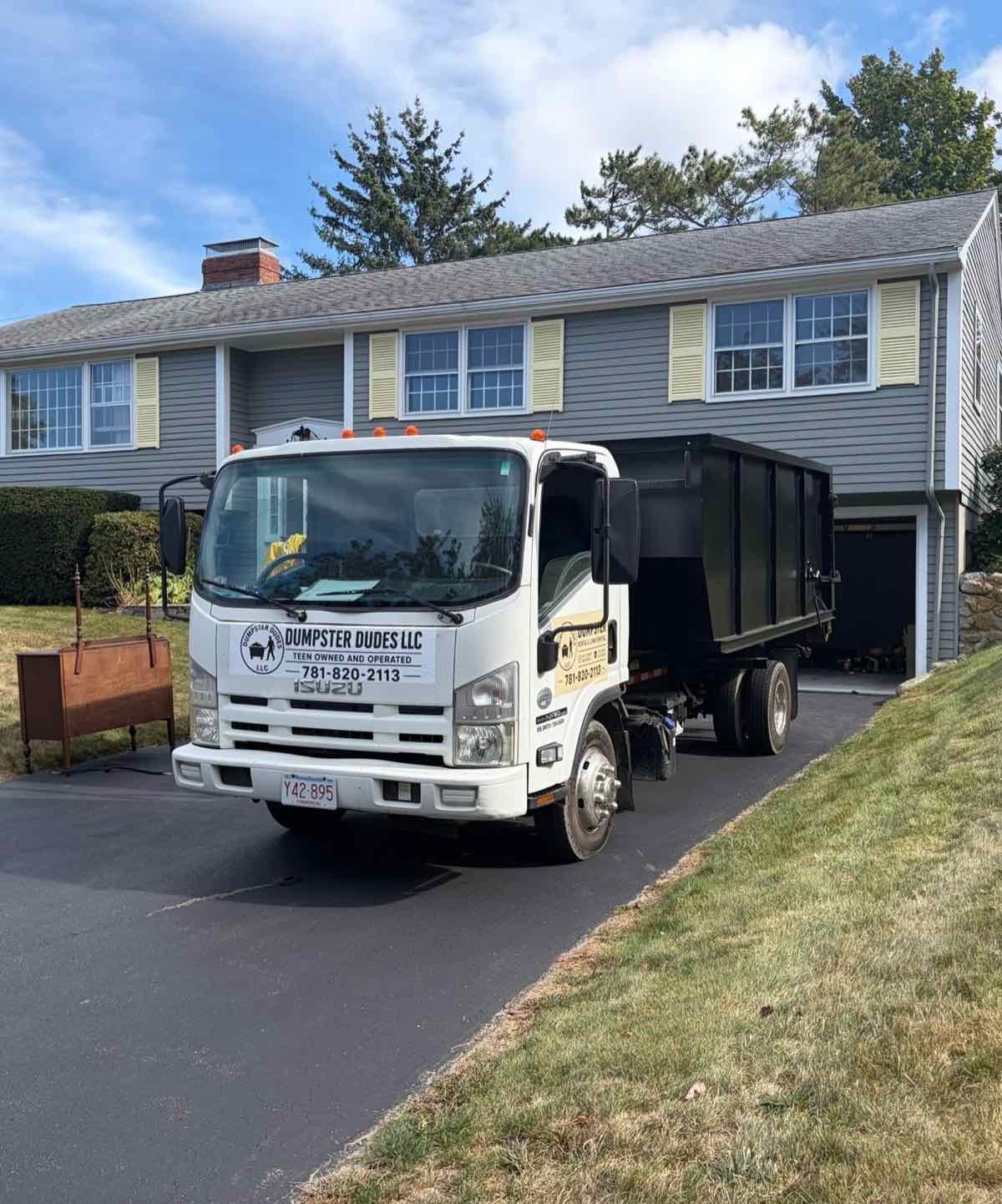
Demand for these things is no joke: we picked up a brand-new 15-yard dumpster from the factory on a Thursday night, and it was already rented out by Friday morning. If you're thinking about booking for a weekend project, earlier is better than later.
Check AvailabilityHow Long Can You Keep It?
Most residential rentals are priced around a roughly week-long window, which covers the vast majority of cleanouts, garage clear-outs, and small renovations without rushing anyone. Longer construction or renovation jobs can extend into weekly or monthly arrangements instead of a flat short-term rate. If your plans shift — a project runs long, weather pushes a weekend back — extending is usually a quick phone call, not a renegotiation of the whole order.
Dumpster Rental or Junk Removal — Which Do You Need?
If you're already sorting and hauling things yourself over several days — a renovation generating debris as you go, a garage you're tackling on weekends — a dumpster on your own timeline is usually the better and cheaper fit. If you'd rather point at a pile and have someone else do the sorting and lifting in a single visit, that's full-service junk removal, which costs more but takes the physical labor off your plate entirely. You tell us what to toss, and we do all the heavy lifting either way — the only question is whether you want to do any of the loading yourself. Not sure which fits? See our breakdown of signs it's time to call a junk removal crew instead of renting a dumpster, or just call and describe the job — we'll tell you straight, not just push the bigger option.
Related Guides
- Dumpster size guide — a closer look at 10, 15, 20 & 30-yard dumpsters compared
- Construction debris removal — for contractors generating steady renovation waste
- Junk removal pricing — if you're deciding between a dumpster and full-service removal
Areas We Serve
We deliver dumpster rentals across the South Shore, including:
Sources: EPA — Section 608 Refrigerant Management Program, MassDEP — Waste Disposal Bans, City of Cambridge — Dumpster License & Permit Guidance.
Frequently Asked Questions
How much does it cost to rent a dumpster on the South Shore?
Most residential dumpster rentals run $250-$550 depending on size and what's going in, with heavier materials like shingles or concrete pushing toward the top of that range. We keep it simple with two sizes — 15 and 20-yard — so pricing stays straightforward instead of a dozen confusing tiers.
What size dumpster do I need?
15 yards covers most residential cleanouts, garage or basement clear-outs, and small renovations — it's the size we deliver most often. 20 yards is the move for whole-house cleanouts, bigger renovations, or roofing and siding jobs.
Do I need a permit to put a dumpster in my driveway in Massachusetts?
Not usually. A dumpster kept entirely on your own driveway or property typically doesn't need a town permit anywhere on the South Shore. If there's no room and it has to sit in the street or a public right-of-way instead, your town will require a permit for that — we'll flag it during scheduling if your job looks like it needs one.
How long can I keep a rented dumpster?
Most residential rentals run about a week, which covers the vast majority of cleanouts and small renovations. Need more time? Just say so — extending a rental is usually a quick phone call, not a renegotiation.
What can't go in a rental dumpster?
Hazardous materials — oil-based paint, chemicals, fuel, propane tanks, and similar items — can't go in with everything else and need separate handling. Mattresses and electronics are banned from Massachusetts landfills too, so they get recycled rather than dumped, not thrown in loose.
How far in advance should I book a dumpster rental?
Same-day and next-day delivery is often available depending on scheduling, but booking a few days ahead gives you the most flexibility on exact timing — especially during peak renovation season in spring and fall.
Is it cheaper to rent a dumpster or hire junk removal?
A dumpster rental is usually cheaper per job if you're willing to do the sorting and lifting yourself over several days. Junk removal costs more but someone else does all the physical work in a single visit — see our junk removal pricing guide for a full breakdown.
What's the difference between a 15-yard and 20-yard dumpster?
A 15-yard holds roughly 6 pickup truck loads and fits most driveways — it's the right call for single-room cleanouts and small renovations. A 20-yard holds roughly 8 pickup truck loads and is the better fit for whole-house cleanouts, roofing jobs, or bigger renovations.